In today’s fast-paced world, the demand for dependable and efficient power supply is growing. Power grids face numerous challenges, such as fluctuating energy demands, integration of renewable sources, and aging infrastructure. To address these issues, utilities are turning to modern technology. One of the most impactful innovations is the Substation Automation System SCADA. This system provides intelligence, real-time control, and increased monitoring for electrical substations.
This blog explores how the Substation Automation System transforms traditional substations into smart, efficient hubs. We will also cover the benefits of using a SCADA Automation system, how it improves grid performance, and why choosing the right SCADA Automation system solution provider matters.
What Is a Substation Automation System SCADA?
A Substation Automation System SCADA integrates various control, protection, and monitoring devices within a power substation into a centralized system. SCADA stands for Supervisory Control and Data Acquisition, a technology that enables operators to monitor and control electrical assets remotely.
Key components of a Substation Automation System include:
- Intelligent Electronic Devices (IEDs)
- Remote Terminal Units (RTUs)
- Human Machine Interface (HMI)
- Communication networks
- Central control systems
This system collects data, analyzes it, and sends commands to equipment to maintain optimal operation.
How Does a SCADA Automation System Work?
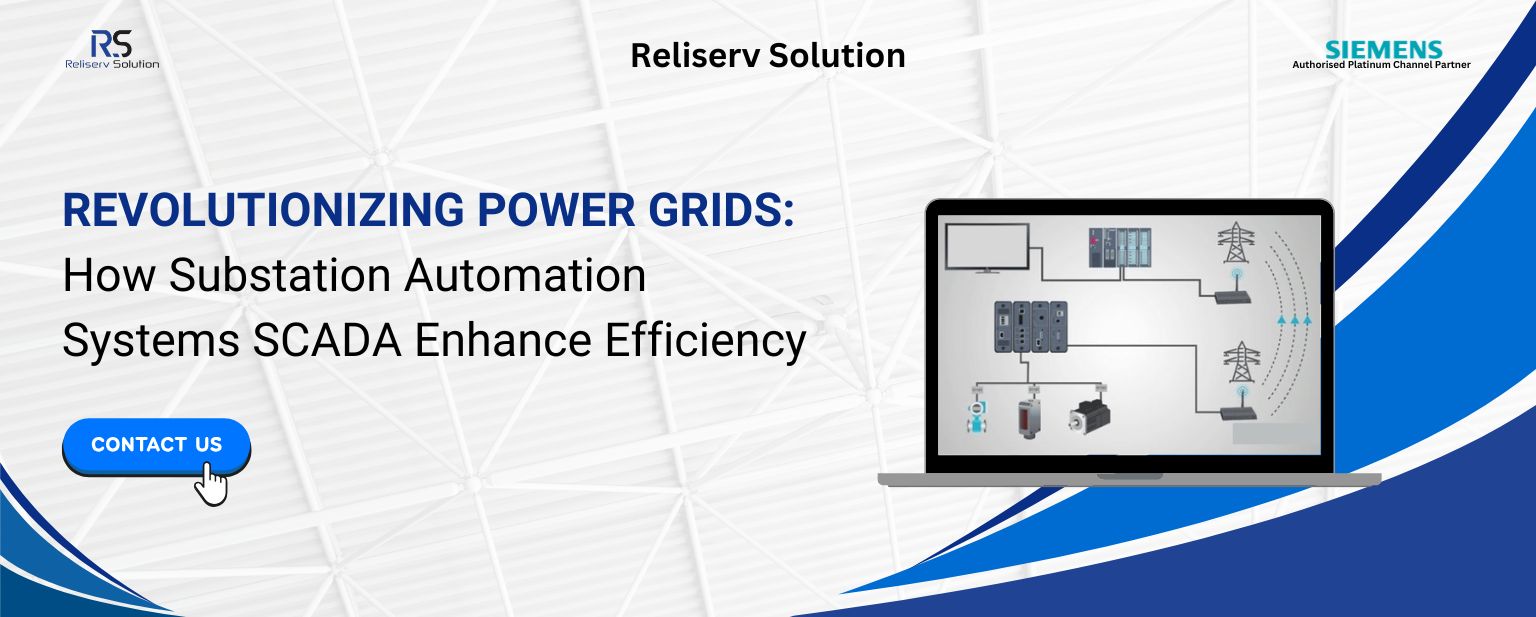
The SCADA Automation system works by connecting field devices and control centers using high-speed communication protocols.It continuously checks important factors like voltage, current, and equipment status. When an abnormal condition occurs, it automatically triggers protective actions or alerts operators for intervention.
The workflow of a Substation Automation System SCADA generally follows these steps:
- Sensors and IEDs gather information from circuit breakers, transformers, and meters.
- Data is transmitted to RTUs or gateways.
- The SCADA server processes the data.
- Operators see the data on HMIs or control room consoles.
- Commands or adjustments are sent back to field devices as needed.
This automated loop improves system responsiveness and reduces human error.
Benefits of Using Substation Automation System SCADA
Implementing a Substation Automation System offers many advantages for utilities and industries alike. Below are some key benefits:
- Improved Grid Reliability
- Detects faults instantly, reducing outage times.
- Enables quick fault isolation to prevent cascading failures.
- Provides real-time data to support decision-making.
- Enhanced Operational Efficiency
- Automates routine control tasks.
- Allows remote monitoring and control, reducing field visits.
- Minimizes manual interventions, cutting operational costs.
- Better Asset Management
- Tracks equipment health through continuous monitoring.
- Schedules maintenance based on actual conditions.
- Extends asset life and reduces unplanned downtime.
- Increased Safety
- Reduces the need for personnel in hazardous locations.
- Sends immediate alarms for dangerous conditions.
- Supports emergency protocols through automated controls.
- Integration with Renewable Energy Sources
- Supports smart grid capabilities.
- Manages fluctuating inputs from solar and wind plants.
- Balances load to maintain grid stability.
Why Choose a Trusted SCADA Automation System Solution Provider?
Selecting the right SCADA Automation system solution provider is critical for successful implementation. Here are the reasons why:
- Expertise in Design and Engineering: A reliable provider customizes the solution based on your network’s specific needs.
- Advanced Technology: They offer the latest devices and software to future-proof your system.
- Comprehensive Support: Includes installation, training, and after-sales service.
- Compliance and Standards: Ensures the system meets industry regulations.
- Competitive SCADA Automation system price: Delivers value without compromising quality.
Working with a trusted supplier ensures a smooth project execution and long-term benefits.
How SCADA Automation System Price Impacts Your Investment
The SCADA Automation system price can vary depending on system size, complexity, and technology used. While initial investment might seem high, consider these points:
- Automation reduces manpower and operational costs.
- Preventing outages saves significant revenue.
- Extending equipment life lowers replacement costs.
- Improved data analytics enhance decision-making.
Thus, the return on investment justifies the cost of a quality Substation Automation System
Real-World Impact of Substation Automation Systems
Many utilities worldwide report impressive improvements after deploying SCADA Automation systems:
- Faster fault detection reduced outage durations by 40%.
- Remote control decreased operational costs by 30%.
- Predictive maintenance reduced equipment failures by 25%.
These benefits translate into a more stable power supply and satisfied customers.
Implementing a Substation Automation System SCADA: Best Practices
Here are some tips to ensure successful deployment:
- Conduct a thorough site survey and system assessment.
- Define clear objectives and performance metrics.
- Train staff adequately on the new system.
- Plan for future scalability and upgrades.
- Ensure cybersecurity measures are in place.
Following these practices helps maximize system efficiency and reliability.
Future Trends in SCADA and Substation Automation
The future of power grid automation is exciting. Emerging trends include:
- IoT Integration: Using sensors and connected devices for even more data.
- Edge Computing: Processing data closer to field devices for faster response.
- AI and Machine Learning: Predictive maintenance and anomaly detection.
- Cloud-Based SCADA: For scalable, cost-effective remote management.
- Enhanced Cybersecurity: Advanced encryption and threat detection.
Staying updated with these trends ensures your grid remains efficient and secure.
Challenges to Watch for in Substation Automation Projects
Like any technology, SCADA implementation has challenges:
- Integration with legacy systems can be complex.
- Cybersecurity risks need continuous attention.
- Training operators to manage advanced systems is essential.
- High upfront investment may deter some organizations.
- Communication reliability must be ensured, especially in remote areas.
Addressing these challenges with a trusted SCADA Automation system Solution Provider is crucial.
Conclusion
The Substation Automation System SCADA is revolutionizing the way power grids operate. By automating monitoring and control, it greatly enhances grid reliability, operational efficiency, and safety. Utilities and industries benefit from reduced downtime, better asset management, and seamless integration with renewable energy sources.
Investing in a robust SCADA Automation system is essential for the future of power distribution. To get the best value and performance, always partner with a trusted SCADA Automation system solution provider who offers competitive SCADA Automation system price and comprehensive support.
With smart substations powered by automation, the path to a more reliable, efficient, and sustainable power grid is clear.
Reliserv Solution is a leading supplier and distributor of Substation Automation System SCADA. Based in Mumbai, Maharashtra, the company provides a wide range of services and customized solutions to panel builders and various industrial sectors. Please contact us with any questions or concerns regarding the SCADA solutions & services by phone at +91 7506112097 or by email at [email protected]. For additional information about the SCADA solutions, click here.