Electrical systems are the lifeline of industries. But with their benefits come risks, one of the most serious being arc flashes. These are dangerous electrical explosions that can cause injuries, damage, and even fatalities. This is where Arc Flash Study and Analysis steps in. Identifying risks and designing protective measures helps reduce the dangers linked to arc flashes. An Arc Flash Study is not just a compliance requirement; it’s a safety necessity.
In this blog, we will explore what these studies mean, why they matter, and how they protect both people and equipment.
An Introduction to the Arc Flash Study and Analysis
We provide comprehensive arc flash analysis programs along with detailed arc flash study reports to enhance the safety, reliability, and efficiency of electrical power systems. The concept of Arc Flash Study & Analysis was formally introduced by the IEEE over a decade ago and has since become an essential safety practice in the electrical industry.
An arc flash is the intense burst of light and heat generated during an arc fault, when electrical current flows through an air gap between conductors. This process ionizes the surrounding air and releases an enormous amount of thermal energy. Temperatures during an arc flash can soar to 35,000°F, which is significantly hotter than the surface of the sun.
Purpose of Arc Flash Hazard Study & Analysis
The primary objective of an arc flash study is to establish protective clothing and equipment requirements for personnel working on or near live electrical equipment, wherever feasible. This involves:
- Assessing the risk of injury from incident energy (IE) generated during an arc flash event
- Reducing incident energy exposure by applying optimized protective device settings
- Recommending suitable arc flash hazard protection measures
- Ensuring compliance with OSHA, NEC, and NFPA 70E standards
Who Needs Arc Flash Hazard Analysis?
Arc flash hazards can exist in most commercial, institutional, and industrial electrical systems. OSHA regulations require these systems to be analyzed, and if hazards are detected, labels must be installed to identify the arc flash boundary.
Our Arc Flash Hazard Analysis Process
Our experienced power systems engineers carry out a systematic and accurate analysis to:
- Protect electrical workers from arc flash-related injuries
- Define the Flash Hazard Boundary
- Determine the appropriate Personal Protective Equipment (PPE) to minimize injury risks
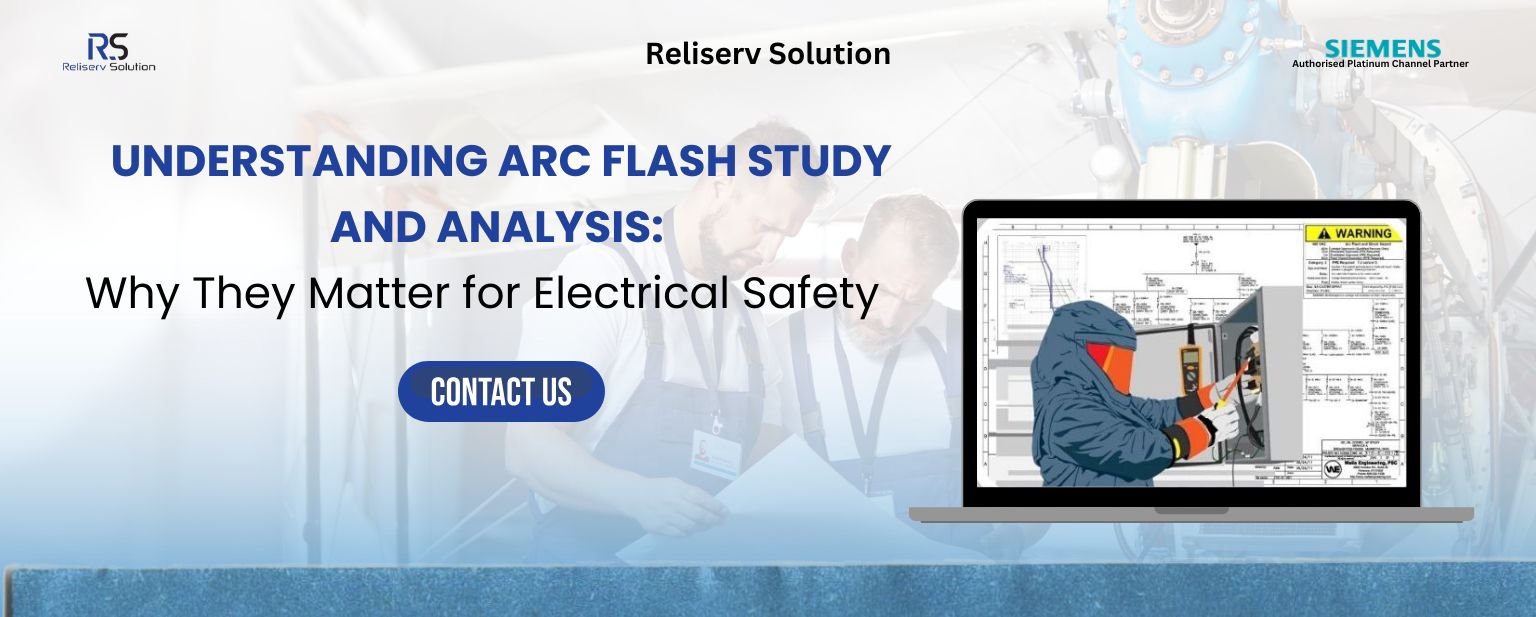
Understanding Arc Flash Study and Analysis
Arc Flash Study and Analysis is a process that examines electrical systems to assess the potential for arc flash hazards.
It involves calculating incident energy levels, defining safe work distances, and recommending protective measures.
An Arc Flash Study often includes:
- Reviewing electrical system data
- Simulating fault conditions
- Identifying hazard levels at each location
- Suggesting suitable personal protective equipment (PPE)
- Creating warning labels for equipment
Why Arc Flash Studies Are Important
Safety is the primary reason for conducting an Arc Flash Study and Analysis. But there’s more to it than avoiding injuries.
Here’s why they are essential:
- Protects workers from severe injuries during unexpected electrical faults
- Reduces equipment damage by identifying risks early
- Ensures compliance with safety standards like NFPA 70E and IEEE 1584
- Prevents costly downtime by reducing accidents
- Improves awareness through clear safety labels and training
Without a proper Arc Flash Study, workplaces risk accidents, fines, and operational delays.
The Process of Arc Flash Study and Analysis
A good Arc Flash Study Service Provider follows a structured approach to ensure accuracy and compliance.
The typical process involves:
- Data Collection: Gather details about the electrical network, including single-line diagrams, equipment ratings, and cable sizes.
- System Modeling: Create a digital model of the electrical system to simulate possible fault scenarios.
- Fault Current Calculation: Determine how much current flows during faults to understand the potential energy release.
- Incident Energy Calculation: Identify the amount of heat energy that can cause burns at specific distances.
- Arc Flash Boundary Determination: Define safe working distances to avoid serious injury.
- Labeling and Reporting: Attach hazard warning labels and prepare a detailed report for maintenance teams.
Benefits of Performing Arc Flash Studies
Performing an Arc Flash Study and Analysis offers multiple benefits:
- Worker Safety – Prevents burns, hearing damage, and eye injuries.
- Regulatory Compliance – Meets safety codes, avoiding penalties.
- Operational Reliability – Reduces downtime from equipment failure.
- Cost Savings – Avoids medical costs, legal claims, and repair expenses.
- Improved Training – Gives workers clear information on hazards.
By investing in this process, companies create safer environments and protect their assets.
Common Causes of Arc Flashes
Arc flashes can occur for several reasons, often due to human error or equipment failure.
Some common causes include:
- Loose electrical connections
- Damaged insulation on cables
- Dust or corrosion on equipment
- Inadequate maintenance
- Accidental contact with live parts
- Faulty tools or testing equipment
An Arc Flash Study helps identify and address these issues before accidents occur.
Cost Considerations for Arc Flash Studies
One common question companies ask is about the Arc Flash Study Price.
The cost can vary depending on:
- Size of the electrical network
- Complexity of the system
- Geographic location
- Level of detail required
While the Arc Flash Study Price may seem high initially, the long-term benefits outweigh the cost. Preventing a single serious accident can save far more than the investment in the study.
Choosing the Right Arc Flash Study Service Provider
Selecting the right partner for your Arc Flash Study and Analysis is critical. A poor-quality study can leave risks unaddressed.
When choosing an Arc Flash Study Service Provider, look for:
- Proven industry experience
- Qualified electrical engineers
- Knowledge of NFPA 70E and IEEE 1584 standards
- Advanced simulation software
- Clear reporting and labeling services
- Good customer reviews and references
A reliable provider ensures the study is accurate, detailed, and compliant.
How Often Should You Update Your Arc Flash Study?
Safety standards recommend updating your Arc Flash Study:
- Every five years
- When major electrical system changes occur
- After adding or replacing large equipment
- Following a major incident or fault
Regular updates keep the data accurate and ensure worker protection.
Human Impact of Arc Flash Hazards
Beyond technical details, it’s important to remember the human side of arc flash safety.
Many accidents result in lifelong injuries. Workers may suffer from burns, vision loss, or hearing damage. Some may be unable to return to work.
Performing Arc Flash Study and Analysis is not just about ticking a compliance box—it’s about protecting people’s lives.
Simple Steps to Reduce Arc Flash Risks
While a professional study is essential, companies can also take everyday steps to reduce risks:
- Train workers on electrical safety practices
- Use insulated tools
- Perform regular equipment inspections
- Keep equipment clean and dust-free
- Avoid working on live circuits whenever possible
- Provide the correct PPE for each task
Combining these practices with an Arc Flash Study creates a strong safety culture.
Conclusion
Arc Flash Study and Analysis is one of the most effective ways to improve workplace electrical safety. It identifies hazards, recommends solutions, and ensures compliance with important standards.
By working with a trusted Arc Flash Study Service Provider, companies can protect workers, reduce downtime, and maintain reliable operations. Yes, there is an Arc Flash Study Price to consider, but compared to the potential costs of accidents, it is a small investment.
Safety is not an expense. It’s a responsibility. An Arc Flash Study ensures you meet that responsibility, creating a safer and more productive workplace for everyone.
One of the top suppliers and distributors of Power System Studies is Reliserv Solution. This company offers a variety of services and tailored solutions to panel builders and other industrial sectors. Its main office is in Mumbai, Maharashtra. If you have any queries or concerns regarding our Arc Flash Study and Analysis, please contact us at +91 7506112097 or email [email protected]. Click here to learn more about the Power System Studies.