Electrical networks are becoming more complex every year. Utilities and industries demand higher safety, accuracy, and reliability. Protection coordination plays a critical role in meeting these expectations. One small mistake in protection design can cause serious equipment damage. This is where proper fuse selection becomes extremely important.
Fuse coordination is not just about choosing a rating. It involves understanding load behavior, fault levels, and network topology. When fuse sizing aligns with protection settings, systems perform better. Engineers can avoid unwanted trips and long outages.
This blog explains how integrating Fuse Dimensioning (DN) with protection settings creates strong protection coordination. It also explains the synergy achieved using Siemens PSS®SINCAL tools. The approach is practical, human-focused, and easy to understand.
Understanding Fuse Dimensioning (DN) in Power Systems
Fuse dimensioning is the process of selecting the correct fuse rating. The goal is simple protection without overdesign. A correctly sized fuse clears faults safely. It also allows normal load currents without interruption.
Incorrect fuse sizing creates problems. Oversized fuses may fail to protect cables. Undersized fuses may blow during normal operation. Both situations reduce system reliability.
Using a structured Fuse Dimensioning (DN) table helps engineers make correct decisions. The table considers conductor size, installation method, and thermal limits. This ensures safe and consistent fuse selection.
Why Fuse Dimensioning Matters in Protection Coordination?
Protection coordination ensures that only the faulty section disconnects. This limits outages and improves reliability. Fuse dimensioning plays a direct role in this process.
A correctly sized fuse works smoothly with relays. It clears faults before upstream devices operate. This coordination protects transformers, cables, and switchgear.
Without proper dimensioning, coordination becomes unpredictable. Protection studies lose accuracy. Operators face frequent nuisance trips.
Challenges Faced Without Proper Fuse Dimensioning
Many engineers still rely on experience alone. While experience is valuable, complex networks need calculation support. Manual selection can lead to hidden risks.
Common challenges include:
- Incorrect fault-clearing times
- Poor selectivity between devices
- Thermal stress on cables
- Reduced equipment life
These challenges grow with network expansion.
Role of Siemens PSS®SINCAL in Protection Studies
Siemens PSS®SINCAL is a trusted power system analysis tool. It supports detailed protection and coordination studies. Engineers use it for load flow, short circuit, and protection analysis.
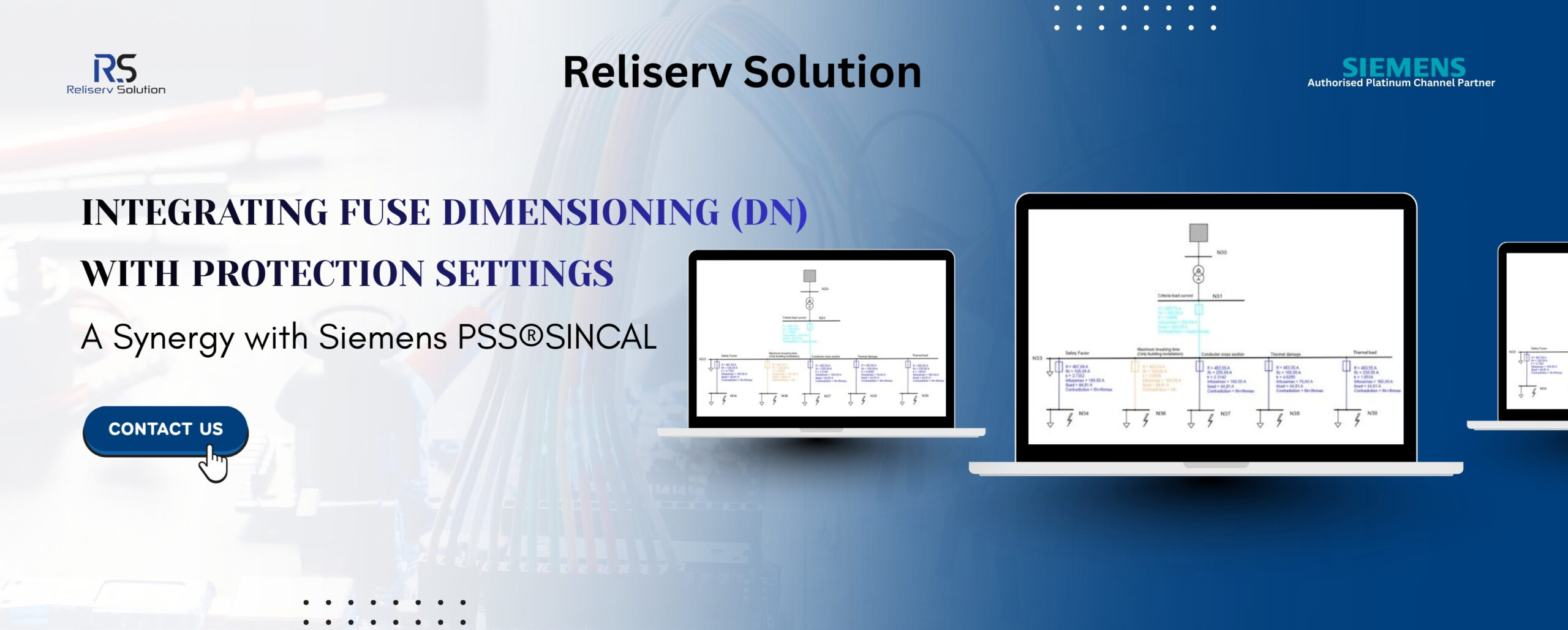
The software allows integration of fuse data with relay settings. This creates a clear view of protection behavior. Engineers can simulate real fault conditions easily.
The Siemens PSS SINCAL Protection Modules support advanced coordination checks. They help identify weak points before commissioning.
How Fuse Dimensioning Integrates with Protection Settings
Integration means fuse characteristics align with relay curves. This alignment ensures selective fault clearing. Both devices work together instead of competing.
The process includes:
- Calculating load currents accurately
- Evaluating short circuit levels
- Selecting fuse ratings from standard tables
- Coordinating fuse curves with relay settings
This structured approach improves protection quality.
Importance of Using Standard Fuse Dimensioning Tables
A standard Fuse Dimensioning (DN) table ensures uniformity. It reduces guesswork during design. Engineers across teams follow the same reference.
These tables consider:
- Cable insulation limits
- Ambient temperature effects
- Installation conditions
- Continuous load factors
Such details improve safety margins.
Benefits of Integrating Fuse Dimensioning with PSS®SINCAL
When fuse dimensioning integrates with digital tools, accuracy improves. Engineers gain confidence in their designs. Simulation replaces assumptions.
Key benefits include:
- Faster protection studies
- Improved selectivity
- Reduced design errors
- Better documentation
These benefits save time during commissioning.
Human Touch in Protection Engineering
Protection engineering affects people directly. Reliable systems protect workers and communities. Engineers carry responsibility beyond calculations.
When protection works well, outages reduce. Maintenance teams feel safer. Operators trust the system during emergencies.
Technology should support human judgment, not replace it.
Practical Workflow for Engineers
A clear workflow improves project outcomes. Engineers benefit from structured steps.
A recommended workflow includes:
- Collect accurate network data
- Use a verified Fuse Dimensioning (DN) table
- Perform short circuit analysis
- Coordinate fuse and relay curves
- Validate results through simulation
This process builds confidence in protection design.
Role of a Trusted Fuse Dimensioning Provider
Accurate data is essential for correct dimensioning. A reliable Fuse Dimensioning (DN) Provider offers verified tables and guidance. This support reduces design risks.
Providers also help with updates and standards. Engineers stay aligned with regulations. This improves compliance and safety. Reliable data builds reliable systems.
Cost Awareness in Protection Planning
Every project has budget constraints. Understanding the Fuse Dimensioning (DN) cost helps during planning. Cost includes tools, data, and engineering effort.
However, proper dimensioning reduces failure costs. Preventing one fault can save significant money. Long-term savings matter more than initial expense.
Protection investment always pays back.
Supporting Distribution and Industrial Networks
Distribution networks face frequent faults. Proper fuse coordination limits outage areas. Industrial plants depend on uninterrupted processes.
Integrated fuse dimensioning improves:
- Feeder reliability
- Equipment protection
- Process continuity
- Safety compliance
These improvements support business goals.
Training and Skill Development
Tools are effective only with skilled users. Training improves understanding of protection principles. Engineers learn to trust simulation results.
Regular training sessions help teams adapt. Knowledge sharing builds a stronger engineering culture. Well-trained teams design safer systems.
Reducing Field Issues Through Better Design
Many protection issues appear after commissioning. Poor coordination often causes these issues. Integrated design reduces surprises.
Engineers identify problems during simulation. Field adjustments have reduced significantly. This saves time and resources.
Good design prevents bad experiences.
Digitalization and the Future of Protection Design
Digital tools are shaping modern power systems. Integration between studies improves decision-making. Engineers rely on data-driven design.
The combination of Fuse Dimensioning (DN) and Siemens tools supports digital transformation. Networks become smarter and safer. Future grids demand such intelligent approaches.
Importance of Documentation and Traceability
Proper documentation supports audits and maintenance. Integrated studies produce clear reports. Engineers can trace decisions easily.
This transparency helps future upgrades. New engineers understand original design intent. Knowledge continuity improves.
Good documentation protects long-term reliability.
Supporting Regulatory Compliance
Utilities must follow standards and codes. Proper fuse dimensioning supports compliance. Authorities expect documented protection studies.
Integrated tools simplify compliance checks. Reports demonstrate coordination clearly. This avoids regulatory issues. Compliance builds trust with stakeholders.
Conclusion
Integrating fuse dimensioning with protection settings creates safer power systems. Fuse Dimensioning (DN) ensures correct fuse selection. Using a structured Fuse Dimensioning (DN) table improves accuracy and consistency. The Siemens PSS SINCAL Protection Modules provide powerful tools for coordination and simulation.
Working with a reliable Fuse Dimensioning (DN) Provider adds confidence and technical support. Understanding the Fuse Dimensioning (DN) cost helps balance safety and budgets. Together, these elements create strong protection synergy.
This integration is not just technical. It protects people, equipment, and communities. In modern power networks, smart protection design makes all the difference.
Siemens PSS SINCAL SIMULATION SOFTWARE is supplied and distributed by Reliserv Solution, a Siemens Platinum Channel Partner. We offer a variety of services and customized solutions from our Mumbai, Maharashtra, headquarters to meet the needs of different industries and panel builders. If you have any questions, please call us at +91 7506112097 or send us an email at [email protected]. Click here to learn more about Siemens PSS SINCAL SIMULATION SOFTWARE, including the popular Fuse Dimensioning (DN).