Electric vehicles are no longer a fringe option. Businesses across offices, malls, hotels, and fleet hubs now need charging points that keep up with daily demand. That’s why more commercial property owners are turning to Siemens EV Chargers, and specifically the Siemens SICHARGE RC 30, to build charging stations that actually work under real-world pressure.
In this blog, we break down why the SICHARGE RC 30 fits commercial spaces so well, what makes it stand apart from ordinary EV Chargers, and what you should know about Siemens EV Chargers Price before you invest.
What Is the Siemens SICHARGE RC 30?
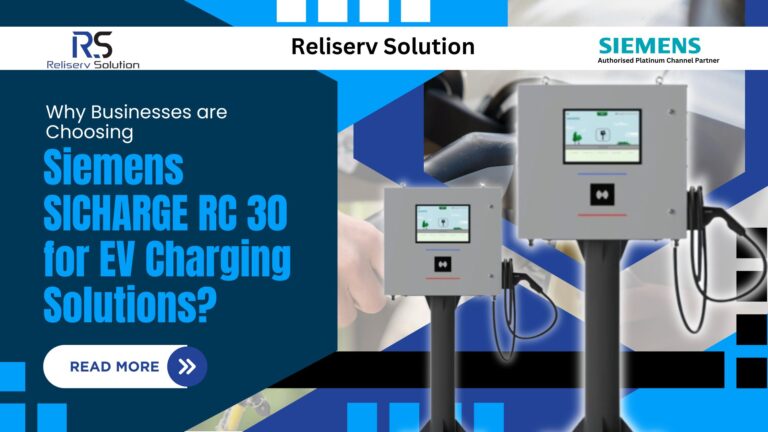
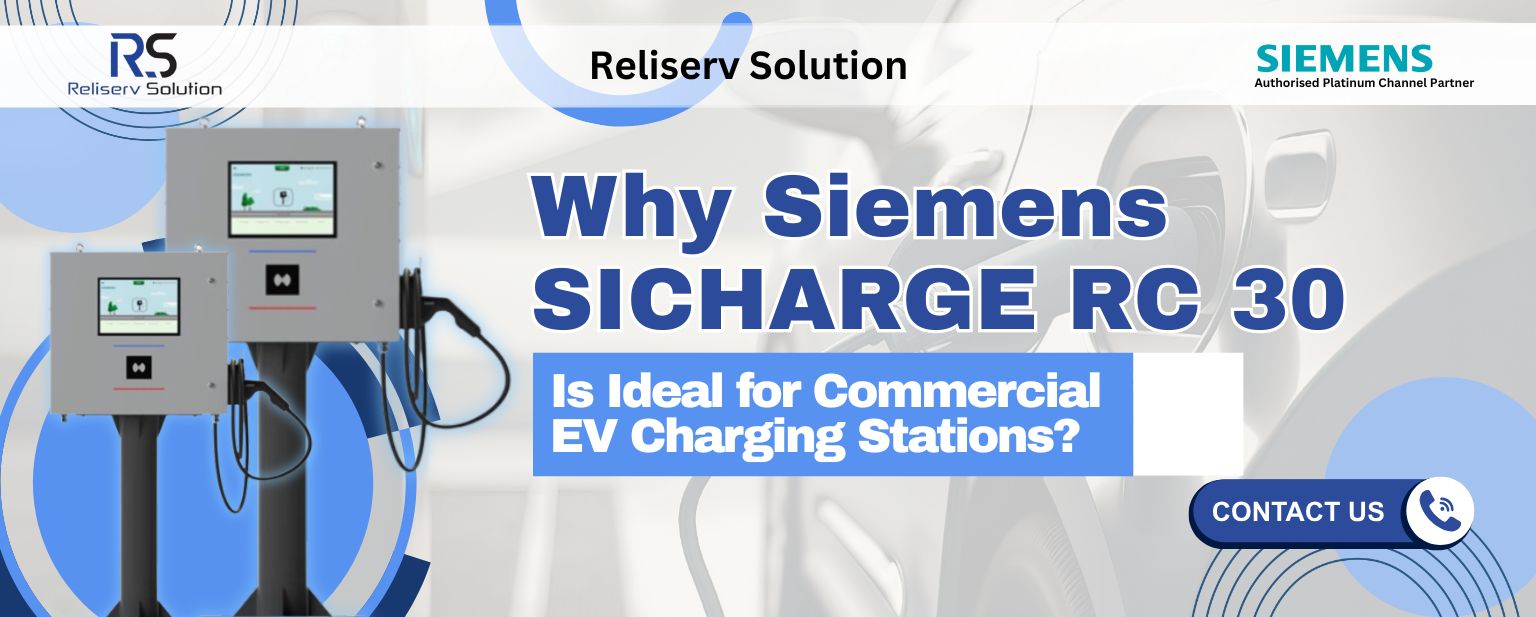
The Siemens SICHARGE RC 30 is a 30 kW DC fast charger built for practical, everyday charging rather than ultra-rapid highway stops. It belongs to Siemens’ SICHARGE RC family, a made-in-India charger range that scales from 30 kW all the way to 360 kW. Because of this, businesses can start small with a single RC 30 unit and expand later as demand grows.
Unlike bulky charging cabinets, the RC 30 comes in a compact wall-box design with a single CCS2 charging cable. So, it fits neatly into tight parking bays, basement garages, and urban sites where space is always at a premium.
Why Commercial Spaces Choose the SICHARGE RC 30
Commercial charging is different from home charging. A charger at a mall, office campus, or hotel needs to serve many drivers, handle repeated daily cycles, and stay online without constant supervision. Here’s why the RC 30 handles that pressure well:
- Faster turnaround than AC chargers: DC output at 30 kW cuts charging time significantly compared to standard Level 2 AC units, so vehicles move through your parking lot faster.
- Compact wall-mounted footprint: The slim design saves valuable parking space, which matters most in cities where every square foot counts.
- Smart load management: The system balances power intelligently, so multiple charging points don’t overload your site’s electrical infrastructure.
- Wide vehicle compatibility: The CCS2 connector and broad voltage range mean most EV brands on the road today can charge without adapters.
- Remote monitoring and control: Operators can track charger status, usage, and performance from a dashboard instead of checking each unit manually.
- Built-in safety protection: Overload protection, short-circuit protection, and temperature monitoring keep both the vehicle and the user safe during every session.
- Communication-ready hardware: Support for protocols like OCPP allows the charger to connect smoothly with backend billing and network management software.
Together, these features turn a simple charging point into a dependable piece of business infrastructure rather than just another appliance on the wall.
Built for Places Where Vehicles Stay a While
Not every EV charging site needs highway-speed charging. Malls, office parks, hotels, and residential communities usually see vehicles parked for an hour or more. That’s exactly the situation the SICHARGE RC 30 is designed for.
- Malls and retail centers: Shoppers can top up their vehicle while browsing, without needing an ultra-fast charge.
- Office campuses: Employees plug in during work hours and leave with a full battery by the end of the day.
- Hotels and hospitality venues: Guests charge overnight or during their stay, adding a valuable amenity without major site disruption.
- Fleet and taxi operations: Vehicles rotate through quick top-ups between trips, keeping the fleet on the road longer.
- Residential complexes: Large housing societies can offer shared charging points that serve many residents efficiently.
This flexibility is a major reason Siemens EV Chargers, and the RC 30 in particular, keep showing up across such a wide range of commercial deployments.
Reliability That Reduces Downtime
For a business, a charger that breaks down isn’t just an inconvenience — it’s lost revenue and an unhappy customer. Siemens builds the SICHARGE RC 30 with industrial-grade components that hold up under continuous, heavy use. As a result, operators see fewer service calls and less unplanned downtime.
Moreover, the unit is designed to operate reliably across a wide temperature range, which means it performs consistently whether it’s installed in a covered parking garage or an open-air lot exposed to changing weather. Consequently, businesses gain a charger that keeps working through the conditions that matter most.
Understanding Siemens EV Chargers Price
One of the most common questions buyers ask is about Siemens EV Chargers Price and, more specifically, SICHARGE RC 30 Price. Siemens does not publish a fixed public price for the RC 30. Instead, the company directs buyers to authorized dealers for a custom quote. This approach actually makes sense once you look at what goes into a real commercial installation.
The final cost typically depends on:
- Hardware configuration: The specific power rating and features you choose for your site.
- Installation scope: Electrical upgrades, cable routing, civil work, and mounting requirements can all shift the total budget.
- Quantity of units: Multi-unit deployments often come with better per-unit pricing than a single charger.
- Service and support packages: Maintenance agreements and extended warranties add predictable long-term costs but also reduce risk.
- Regional factors: Local taxes, subsidies, and available incentives for EV infrastructure can affect your final investment.
So, instead of chasing a single number, it’s smarter to request a detailed quote that covers the charger, installation, and support together. That way, you compare the full project cost rather than just the sticker price of the unit.
Total Cost of Ownership Matters More Than Sticker Price
When you look at SICHARGE RC 30 Price, don’t stop at the upfront number. Consider the ongoing value the charger delivers over its lifetime:
- Energy efficiency: High conversion efficiency means less wasted electricity and lower running costs over time.
- Reduced maintenance: Durable components mean fewer repairs and less service downtime.
- Scalability: Starting with one or two RC 30 units and expanding later avoids over-investing before you know actual demand.
- Resale and long-term value: Siemens equipment tends to hold its value well, which matters if you ever upgrade your site.
Viewed this way, the RC 30 often turns out to be a stronger investment than a cheaper charger that needs frequent repairs or can’t scale with your business.
Conclusion
Commercial EV charging isn’t just about installing a box on a wall, it’s about building infrastructure that keeps customers, employees, and fleets moving without interruption. The Siemens SICHARGE RC 30 checks every box that matters for this job: fast DC charging, a compact footprint, smart connectivity, and the reliability that industrial-grade engineering brings.
Reliserv Solution is your trusted partner in driving sustainable mobility with advanced Siemens EV Chargers. We provide reliable, efficient, and future-ready charging solutions designed to meet the growing needs of electric vehicle owners, businesses, and smart cities. If you need help or have any questions, please contact us by phone at +917506112097 or by email at [email protected]. Click here to view the Siemens EV Chargers range.