Circuit breakers protect every piece of equipment downstream. So, when they fail to operate correctly, the entire system suffers. Regular Circuit Breakers Commissioning and testing help prevent this from happening at all. One undetected fault in a breaker can cascade to major equipment damage.
Many facilities skip proper testing until something goes wrong. However, this approach risks costly failures, unplanned shutdowns, and safety hazards. Routine Circuit Breakers Servicing catches problems early, before they turn into expensive repairs. This is why proactive testing is a core part of any strong maintenance program.
What Is Circuit Breakers Commissioning?
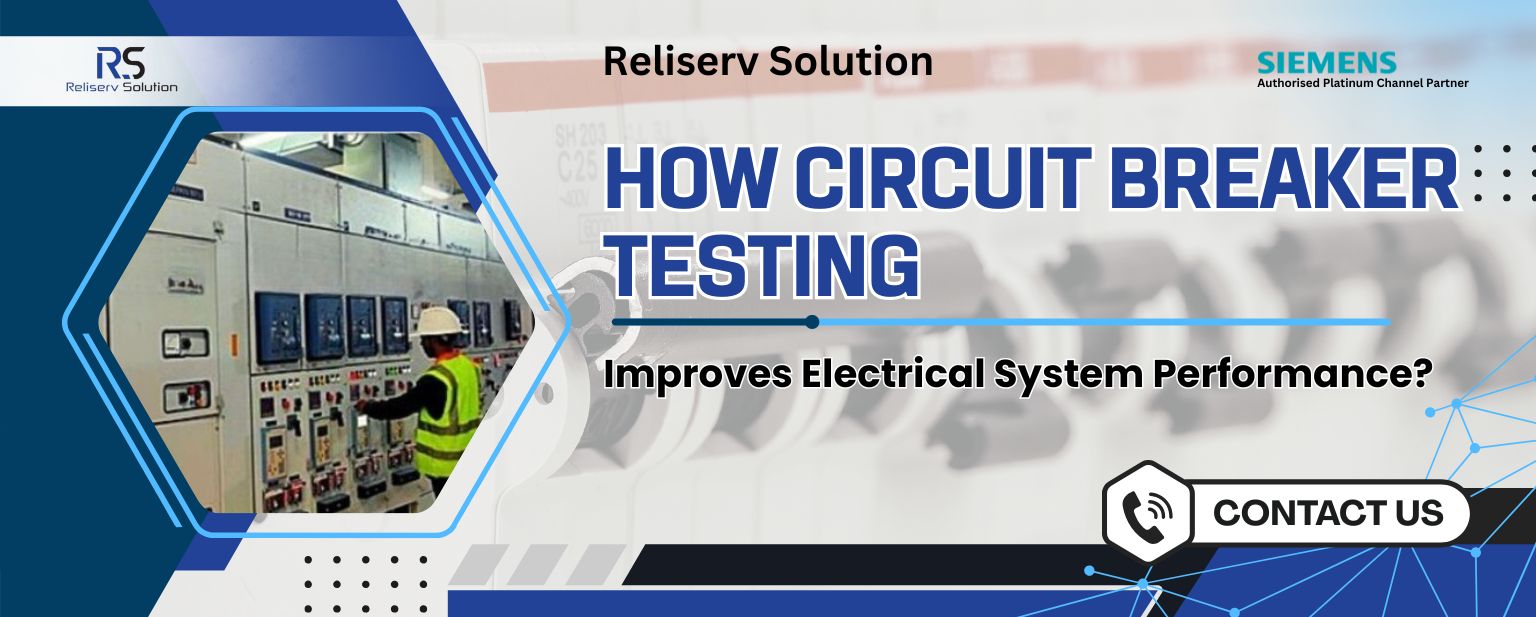
Circuit Breakers Commissioning refers to the full process of testing and verifying a breaker before it goes live. Engineers check that every function works correctly under both normal and fault conditions. As a result, the breaker performs reliably from day one of operation.
This process covers several important checks, including:
- Contact resistance testing to ensure low-resistance current paths.
- Insulation resistance testing to check for degradation in insulation material.
- Timing tests to verify the breaker opens and closes within manufacturer limits.
- Trip coil verification to confirm that protective trip signals operate correctly.
- Mechanical operation checks to ensure smooth, consistent breaker movement.
Each of these steps adds a layer of confidence to the final installation. Consequently, engineers and facility managers can operate the system without hidden risks. Skipping any step during Circuit Breakers Commissioning can leave faults undetected until a real fault event occurs.
Why Circuit Breaker Servicing Matters Every Year
Circuit breaker servicing keeps the device working as intended throughout its service life. Over time, contact surfaces wear, lubricants dry out, and mechanical parts loosen. Therefore, a breaker that passed commissioning years ago may not perform correctly today.
How often should you service a breaker? Most manufacturers recommend periodic testing based on either time intervals or the number of operations. Furthermore, high-cycle breakers in industrial plants may need more frequent attention than those in substations.
Regular circuit breaker servicing helps teams identify:
- Worn or pitted contacts that increase resistance during current flow.
- Stiff or sluggish mechanisms that slow down trip response times.
- Degraded arc chutes that reduce the breaker’s ability to interrupt faults.
- Weak springs or loose fasteners that affect consistent operation.
How Testing Directly Improves System Performance
Poorly maintained circuit breakers slow down fault clearing. As a result, the fault lingers longer, causing greater damage to downstream equipment. On the other hand, a well-tested breaker clears faults fast and minimizes this damage significantly. Testing also confirms coordination between multiple breakers in a network. When one breaker trips, others should stay closed. This selectivity keeps the maximum part of the network in service. Therefore, only the faulted section goes offline, not the entire plant or substation.
Furthermore, testing during Circuit Breakers Commissioning sets a clear performance baseline. Engineers record timing values, contact resistances, and insulation readings. Later servicing teams compare these numbers to spot any degradation quickly. Additionally, proper testing reduces nuisance tripping. Nuisance trips cause unplanned downtime without any real fault present. By verifying settings accurately, teams eliminate this costly and frustrating problem.
Understanding Circuit Breakers Commissioning Cost
The circuit breaker commissioning cost depends on several key factors. Breaker voltage class, type, quantity, and site accessibility all affect the final figure. Furthermore, any required follow-up adjustments or remedial work also add to the total.
However, Circuit Breakers Commissioning Cost should always be seen as a long-term investment. One undetected fault in a poorly commissioned breaker can damage transformers, switchgear, or cables.
Moreover, proper commissioning supports insurance requirements and regulatory compliance. Many plant operators must demonstrate that breakers meet performance standards. So, documented commissioning records protect organisations from compliance issues and disputes later.
- Scope of tests included in the base price.
- Number of engineers assigned to the job.
- Equipment was brought to the site for testing.
- Reporting format and documentation delivered afterwards.
Ultimately, the right circuit breaker commissioning cost reflects quality, thoroughness, and long-term value.
Choosing the Best Circuit Breakers Commissioning Service Provider
Selecting a reliable circuit breaker commissioning service provider is just as important as the tests themselves. An experienced provider understands the nuances of different breaker types, ages, and manufacturers. As a result, they complete the work efficiently and accurately every time.
What should you look for in a good circuit breaker commissioning service provider? Check for qualified engineers, calibrated test equipment, and clear reporting. Moreover, look for a provider with experience across both MV and HV breakers for broader coverage.
A good circuit breaker commissioning service provider typically offers the following:
- Pre-commissioning site surveys to plan work without surprises.
- Manufacturer-compliant test procedures for every breaker type.
- Detailed test reports with pass/fail results and recorded data.
- Recommendations for remedial action when results fall outside limits.
Not only that, but a strong provider also supports ongoing circuit breaker servicing after initial commissioning. This creates a long-term maintenance partnership rather than a one-time visit.
Common Circuit Breaker Faults That Testing Prevents
Testing during commissioning and servicing uncovers many common problems before they cause outages. Understanding these faults helps teams appreciate why testing adds such strong value.
Some of the most common faults that regular testing reveals include:
- Slow trip times caused by worn trip coils or sluggish mechanisms.
- High contact resistance caused by corrosion, burning, or debris on contact surfaces.
- Insulation breakdown from moisture ingress, ageing, or contaminated surfaces.
- Incorrect relay settings that cause either missed trips or nuisance trips.
- Mechanical misalignment from settlement, vibration, or poor installation practice.
Each of these problems can develop silently over months or years. However, systematic Circuit Breakers Servicing catches them early through periodic measurement. Therefore, teams address small issues during planned downtime rather than emergency breakdowns.
As a service provider based in Navi Mumbai, Reliserv Solution supports both commissioning and servicing programs across industries. This on-site expertise helps facilities stay compliant and operationally safe.
How Documentation Supports Long-Term Reliability
Good testing produces good records. So, documentation is not just a paperwork exercise after commissioning. It forms the backbone of every future maintenance decision.
After Circuit Breakers Commissioning, engineers produce a detailed test report. This report records every measurement taken during the process. Furthermore, it lists any corrective actions carried out before the breaker went into service.
Why does this documentation matter so much later? Because it gives servicing teams a baseline to compare against. If contact resistance rises by 20% over five years, the team knows exactly when the degradation began. As a result, they can plan corrective work before the breaker reaches a critical threshold.
Strong documentation also helps in these situations:
- Insurance claims following a fault or fire event.
- Regulatory inspections that require proof of maintenance history.
- Equipment handover when facilities change ownership.
- Troubleshooting recurring faults across similar breaker types.
In addition, digital records are now increasingly common in modern facilities. Cloud-based platforms store test data and flag breakers that are approaching service intervals. Consequently, maintenance teams stay ahead of problems rather than reacting to them.
Benefits of a Proactive Commissioning and Servicing Program
The advantages of a proactive approach to commissioning and servicing are strong and demonstrable. It moves teams away from reactive maintenance toward planned, predictable operations.
Key benefits of a structured programme include the following:
- Longer equipment life; regular maintenance extends breaker service life significantly.
- Fewer unplanned outages; problems get caught before they cause emergency shutdowns.
- Better safety records; properly tested breakers protect both people and equipment.
- Lower repair costs; small fixes during servicing prevent major replacement work later.
- Regulatory compliance; documented records satisfy inspection and audit requirements.
Furthermore, a well-documented service history adds real value during asset audits or insurance renewals. Facilities with complete test records demonstrate lower operational risk. Consequently, they may benefit from better insurance terms and faster regulatory approvals.
Conclusion
Circuit breaker testing is not just a technical formality. It directly improves system performance, protects equipment, and prevents costly outages. Both circuit breaker commissioning and circuit breaker servicing play essential roles. Together, they keep every electrical system safe and reliable throughout its full working life.
If you are planning a new installation or reviewing your current maintenance programme, now is the right time to act. Contact a trusted circuit breaker commissioning service provider for a full site assessment. They will provide accurate pricing and a service plan built around your specific needs.
Maximize the reliability and performance of your electrical system with professional circuit breaker testing services. Regular testing helps identify hidden faults, verify breaker operation, prevent unexpected failures, and ensure the safe and efficient functioning of critical electrical equipment. At Reliserv Solution, we provide comprehensive circuit breaker testing and commissioning services to help utilities and industries maintain system safety, reliability, and compliance. Call us at +917506112097 or email [email protected] for expert support and technical assistance. Click here to learn how routine Circuit Breakers Commissioning can improve electrical system performance, reduce downtime, and protect valuable assets.