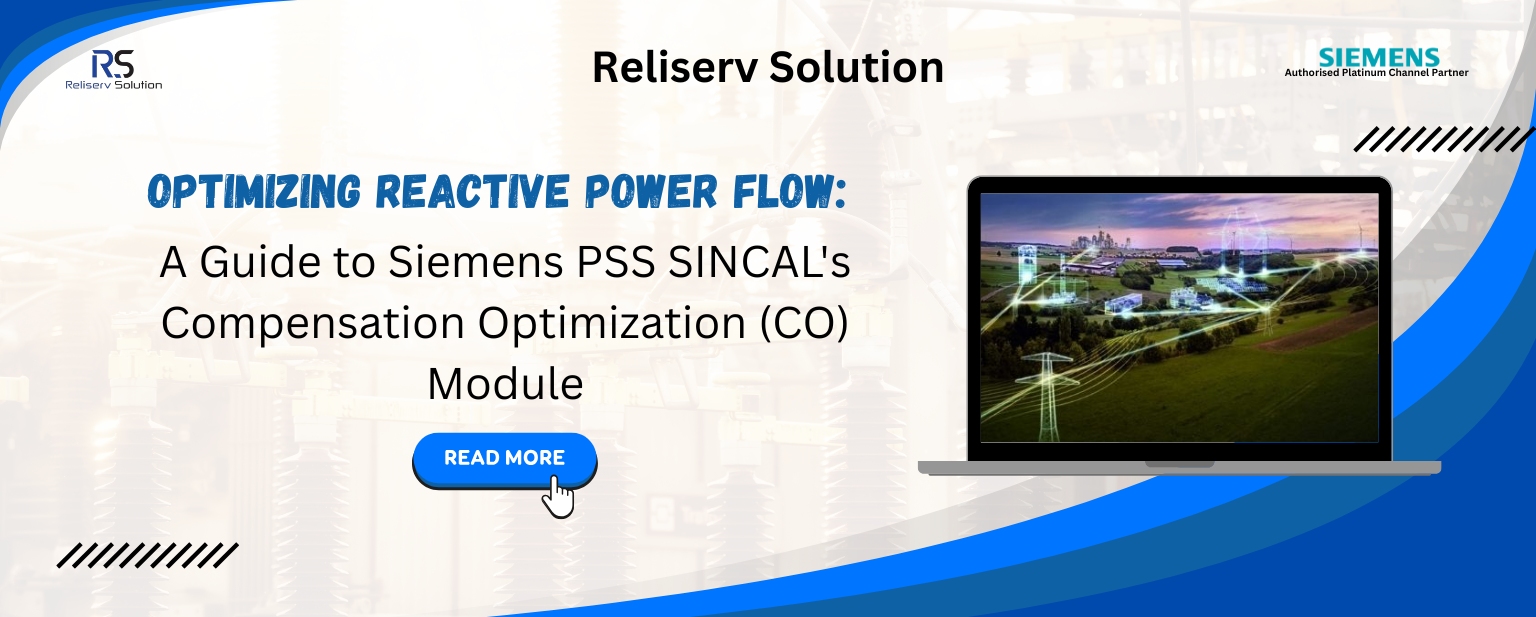
In modern power systems, stability and efficiency go hand in hand. Every utility and industry wants to deliver reliable electricity while keeping losses minimal. One crucial part of achieving this balance is reactive power management. The Compensation Optimization (CO) module in Siemens PSS SINCAL Optimization and Planning Modules is designed precisely for this purpose.
Reactive power is essential for maintaining voltage levels and power quality across a network. However, too much or too little of it can cause voltage instability, overheating, and even system failure. This is where Compensation Optimization (CO) helps engineers find the perfect balance. By using advanced algorithms and real-time data, it ensures power systems run smoothly and economically.
Let’s explore how this module works, its benefits, and why it’s becoming a must-have for power system engineers worldwide.
What is the Compensation Optimization (CO) Module?
The Compensation Optimization (CO) module is a feature within the Siemens PSS SINCAL Optimization and Planning Modules suite. It is designed to analyze reactive power distribution and automatically recommend optimal compensation strategies.
In simple terms, it helps engineers answer questions like:
- Where should I install capacitor banks or reactors?
- What capacity should each compensator have?
- How will the changes affect network voltage and power flow?
This intelligent optimization ensures that reactive power flows efficiently, minimizing both losses and operational costs.
Understanding the Importance of Reactive Power Flow
Reactive power doesn’t perform any “real” work like active power, but it’s critical for maintaining voltage stability. Without proper control of reactive power, transformers, lines, and motors may experience severe inefficiencies.
When engineers use the Compensation Optimization (CO) module, they can model and optimize the placement and operation of compensating devices, like:
- Capacitor banks
- Reactors
- Static VAR compensators (SVCs)
- FACTS devices
These devices help balance voltage and reactive power across the grid. The Siemens PSS SINCAL Optimization and Planning Modules simplify this process by automating calculations and providing detailed insights into where compensation is most effective.
How Compensation Optimization (CO) Works
The Compensation Optimization (CO) module operates based on advanced power flow and optimization algorithms. These tools evaluate system conditions, simulate different compensation setups, and identify the best configuration.
Here’s a simplified overview of how it works:
- Data Collection: The system gathers network parameters, including loads, voltages, and existing compensators.
- Simulation: The module runs various operating scenarios to predict network behavior.
- Optimization: It determines the optimal size, type, and placement of compensating devices.
- Validation: The final configuration is tested to ensure improved stability and cost efficiency.
Using this approach, engineers can achieve balanced power factor levels, enhanced voltage control, and reduced system losses.
Benefits of Using Compensation Optimization (CO)
The Compensation Optimization (CO) module provides a wide range of benefits that directly improve system performance and reduce expenses.
Here are the major advantages:
- Enhanced Voltage Stability: Maintains voltage within acceptable limits under all operating conditions.
- Reduced Losses: Minimizes reactive power flow, cutting transmission and distribution losses.
- Improved Power Factor: Helps utilities avoid penalties by maintaining power factor close to unity.
- Lower Operating Costs: Optimizes compensator placement, reducing capital and maintenance expenses.
- Better Planning: Integrates with the Siemens PSS SINCAL Optimization and Planning Modules for comprehensive system analysis.
This makes it a complete tool for managing reactive power in both existing and future network designs.
Applications of the Siemens PSS SINCAL Optimization and Planning Modules
The Siemens PSS SINCAL Optimization and Planning Modules are versatile and can be applied in various scenarios. Whether it’s for planning new networks or improving existing ones, they play a vital role in ensuring system reliability.
Some key applications include:
- Distribution Network Optimization: Ensuring balanced voltage levels across large service areas.
- Transmission System Planning: Reducing congestion and improving power flow through reactive power management.
- Industrial System Design: Optimizing capacitor banks for energy efficiency in factories.
- Renewable Integration: Balancing variable reactive power from solar and wind energy sources.
- Smart Grid Development: Supporting digital grids with intelligent compensation strategies.
By integrating Compensation Optimization (CO), engineers can ensure that every part of the system works efficiently, even under changing loads.
How Siemens Makes Optimization Easier
Siemens has always been at the forefront of electrical innovation. The Siemens PSS SINCAL Optimization and Planning Modules reflect this expertise by combining engineering precision with digital intelligence.
Key highlights include:
- User-friendly interfaces for quick configuration.
- Integration with real-time SCADA systems.
- Automatic report generation and graphical results.
- Compatibility with international standards like IEC and IEEE.
The Human Element: Simplifying Complex Decisions
Engineering isn’t only about numbers—it’s about people making better decisions with the right tools. The Compensation Optimization (CO) module empowers engineers to manage their networks with confidence.
By using intuitive simulations and visual analysis, operators can easily identify problem areas and apply corrective measures. This human-centered approach means:
- Fewer manual calculations.
- More informed decisions.
- Reduced risk of human error.
- Better teamwork between the planning and operations departments.
It allows engineers to focus on improving reliability and sustainability rather than troubleshooting constant voltage issues.
Considering Siemens Compensation Optimization Cost
Every engineering decision involves balancing performance with investment. The Siemens Compensation Optimization Cost is influenced by the size of the system, the complexity of modeling, and integration requirements.
However, this investment pays off quickly through:
- Lower power losses.
- Reduced downtime.
- Optimized use of equipment.
- Fewer penalty charges from utilities.
When working with a trusted Siemens Compensation Optimization Provider, industries gain access to full implementation support, training, and after-sales service. This ensures the technology is used effectively for long-term gains.
Choosing the Right Siemens Compensation Optimization Provider
Selecting a reliable Siemens Compensation Optimization Provider is key to maximizing the benefits of the module. Experienced providers help tailor the solution to your specific power network requirements.
They assist in:
- Software setup and configuration.
- Custom optimization modeling.
- Training and on-site support.
- Regular updates and maintenance.
Partnering with an expert provider ensures your Siemens PSS SINCAL Optimization and Planning Modules operate efficiently, delivering accurate and dependable results.
Real-World Impact of Compensation Optimization (CO)
Several utilities and industries around the world have experienced the real benefits of using Compensation Optimization (CO). By optimizing reactive power, they have achieved measurable improvements in energy efficiency and system reliability.
For example:
- Transmission utilities reduced reactive losses by 15%.
- Industrial networks improved their power factor, saving thousands in penalty costs.
- Renewable plants achieved smoother voltage control during fluctuating power generation.
These results highlight how the Siemens PSS SINCAL Optimization and Planning Modules turn complex challenges into practical, measurable outcomes.
Conclusion
Efficient reactive power management is vital for the stability and sustainability of any power system. The Compensation Optimization (CO) module within the Siemens PSS SINCAL Optimization and Planning Modules empowers engineers with precision tools to optimize system performance, enhance voltage stability, and reduce costs.
By collaborating with a qualified Siemens Compensation Optimization Provider, industries and utilities can fully harness the power of this technology. The investment in the Siemens Compensation Optimization Cost not only pays back through savings but also ensures future readiness in an evolving energy landscape.
In a world where every watt matters, the Compensation Optimization (CO) module represents smart engineering at its best—helping people build grids that are efficient, reliable, and ready for tomorrow’s challenges.
Siemens PSS SINCAL SIMULATION SOFTWARES are distributed and supplied by Reliserv Solution, a Siemens Platinum Channel Partner. The main office of the organization is located in Mumbai, Maharashtra. Additionally, we provide a range of services and customized solutions to panel builders and other industries. For assistance or inquiries, please reach us by phone at +917506112097 or via email at [email protected]. View the well-liked Compensation Optimization (CO) from Siemens PSS SINCAL SIMULATION SOFTWARE: PSS SINCAL by clicking here.