Overhead line faults cause power cuts that affect thousands of consumers at once. So, finding these faults quickly reduces downtime and speeds up restoration. The Siemens SICAM FSI helps field teams do exactly that, faster than older methods.
Many distribution utilities still send patrol crews to walk entire feeder routes after a fault. However, this approach wastes time, fuel, and resources on every outage. The SICAM FSI short-circuit indicator changes this by pinpointing the exact fault location automatically.
What Is the Siemens SICAM FSI?
The Siemens SICAM FSI stands for Fault Sensor Indicator. Siemens designed it to detect and signal both earth faults and short circuits on medium voltage overhead lines. As a result, it helps utilities achieve higher network availability with much less manual effort.
This device suits medium voltage overhead lines from 3.3 kV up to 66 kV. It works at both 50 Hz and 60 Hz without any hardware change. Furthermore, it draws power from the line current itself. So, no external power supply or complex wiring is necessary during installation.
The SICAM FSI short-circuit indicator starts detecting faults at just 50 A. This sensitivity catches high-impedance faults that older indicators often miss. Consequently, network operators respond faster every time a fault occurs.
Two Versions of the SICAM FSI Short Circuit Indicator
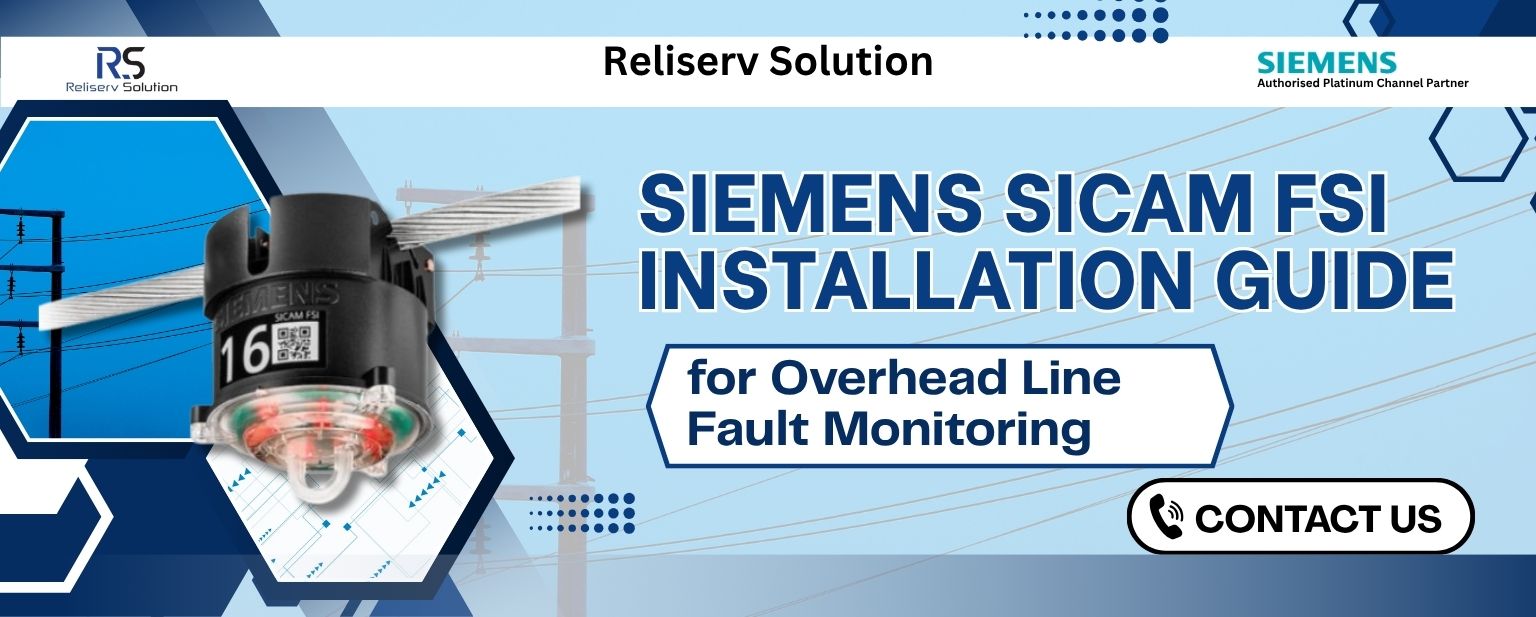
The SICAM FSI Short Circuit Indicator comes in two distinct versions to suit different site needs. The first version, order code 6MD2314-1AB10, works without any communication module. It signals faults directly at the device using LED indicators. Different flashing patterns indicate different fault types, so field crews can identify the fault nature quickly from the ground.
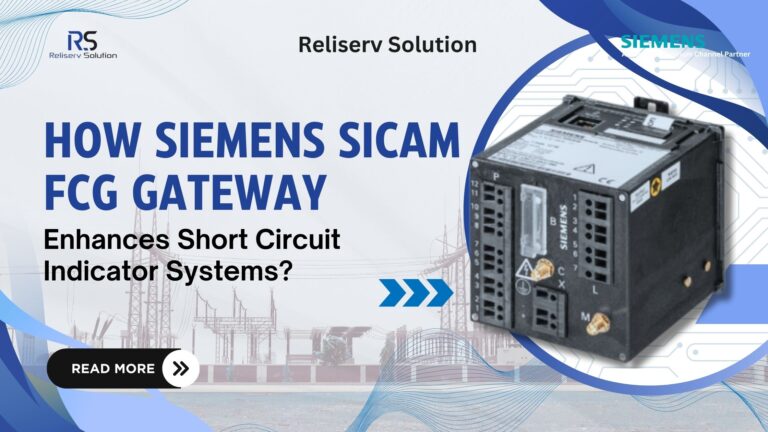
The second version, order code 6MD2314-1AB11, adds wireless communication. In addition to the LED display, this version transfers fault data to the SICAM FCG gateway via a secure radio connection. The SICAM FCG then sends fault messages to the control centre using GPRS. It uses the standardised IEC 60870-5-104 telecontrol protocol for this link.
So, distribution teams get fault alerts directly in their control centre dashboard. As a result, restoration begins faster, and fewer consumers experience extended outages.
Step-by-Step Installation Guide
Installing the Siemens SICAM FSI correctly ensures accurate detection and long device life. Follow these steps during any new installation project.
Step 1: Pre-installation checks
Check the line voltage and current profile first. Confirm that the operating voltage falls within 3.3 kV to 66 kV. Note the normal load current so you can set the Inom threshold correctly.
Step 2: Gather tools and safety equipment
The device clamps onto the overhead conductor using a hot stick. Linemen need a hot stick of appropriate length for the conductor height. All standard live-line PPE applies throughout this step.
Step 3: Configure the device before installation
Scan the QR code on the device body with any smartphone. This opens the FSI Web Configurator in a standard web browser. Set the Inom value between 50 A and 500 A to match the feeder load. Then set the trip time between 1.5×Inom and 3×Inom in 0.5 Inom steps. Set the rate-of-change (ΔI) threshold up to 80 A, 120 A, or 160 A as needed.
Step 4: Install the device on the conductor
Clamp the device onto the conductor using the hot stick. Apply firm, even pressure until both clamps lock securely. Confirm the LED faces downward so field crews can read it from the ground.
Step 5: Commission the communication version if needed
For the 6MD2314-1AB11 model, configure the wireless link to the SICAM FCG gateway. Check the radio signal strength before leaving. Confirm that test fault messages reach the control centre correctly.
Step 6: Record the commissioning date
The device displays its installation year on the body. Record it in the asset system so teams can plan the battery change.
How the SICAM FSI Short Circuit Indicator Detects Faults
The SICAM FSI short-circuit indicator uses several detection methods to identify different fault types. Each method works together to keep detection fast and accurate.
For short circuits, the device monitors the current level continuously. When the current rises above the configured Inom threshold, it registers a fault event. Furthermore, rate-of-change monitoring (ΔI) catches transient fault currents that other indicators sometimes miss.
For earth faults, the device checks the current signature and voltage status on the line. The presence or absence of voltage on the conductor confirms the fault type. As a result, the device generates a flash pattern specific to earth faults. This differs clearly from the short-circuit flash pattern. So, field crews know the fault type immediately from the ground.
After the fault clears, the device resets automatically. It also resets when the voltage returns to the conductor. Consequently, it stays ready for the next fault event without any manual intervention.
Communication, Configuration, and Cybersecurity
The communication version of the Siemens SICAM FSI provides strong data security for every transmission. Siemens built IPsec encryption into the radio link between the device and the SICAM FCG gateway. Therefore, only authorised systems receive fault data.
Configuration takes minutes. Engineers scan the QR code on the device with any web browser. They then configure all settings through the FSI Web Configurator software in minutes. Consequently, there are no DIP switches to adjust and no risk of errors from physical toggles.
For the communication version, additional parameters are available through the SICAM FCG wireless interface. This remote configurability helps teams adjust settings across multiple devices without climbing the line again. In addition, the standardised IEC 60870-5-104 protocol ensures easy integration into virtually any control centre system.
Key Benefits for Overhead Line Networks
The Siemens SICAM FSI delivers several clear benefits to any distribution utility or EPC contractor. Together, these advantages reduce both operational cost and customer outage time.
- Fast fault localisation: field crews go directly to the fault section instead of patrolling long routes.
- Maintenance-free design: apart from a battery change every 10 years, the device needs no servicing.
- High sensitivity: detection starts at just 50 A, catching faults that low-sensitivity devices miss.
- Secure communication: IPsec encryption protects all fault data from the gateway to the control centre.
- Long battery life: a 3.6V battery keeps the device running for 10 full years.
Furthermore, a large commissioning year display on the device body simplifies battery replacement planning. So, maintenance teams schedule battery changes well in advance without checking records in the office.
Siemens SICAM FSI Price and Long-Term Value
Many project managers ask about the Siemens SICAM FSI Price before approving a purchase order. It is a fair question, since every utility and contractor works within a fixed budget.
However, Siemens SICAM FSI Price should always be viewed against the savings it delivers over time. A single two-hour fault delay can cost far more than the device itself. Lost revenue and regulatory penalties quickly add up during extended outages.
Furthermore, the 10-year maintenance-free design keeps the total cost of ownership very low. Unlike older indicators that need annual servicing, this device runs for a decade with virtually zero maintenance cost.
When evaluating Siemens SICAM FSI Price, consider these value factors:
- Reduction in patrol vehicle trips and crew hours per fault event.
- Lower customer compensation costs from faster fault restoration.
- Fewer repeat visits for servicing or reconfiguration.
- Long device life that avoids frequent asset replacement.
Choosing Siemens SICAM FSI Suppliers in Mumbai
Selecting the right partner matters greatly when sourcing overhead line fault indicators. Trusted Siemens SICAM FSI Suppliers in Mumbai offer genuine devices, proper documentation, and strong technical support.
Always confirm that your chosen supplier holds authorised distributor status with Siemens. This step protects your project from unverified stock and ensures full warranty coverage. Moreover, established Siemens SICAM FSI Suppliers in Mumbai can guide you through the correct version selection. They also help set the right Inom value for your specific feeder.
Before placing an order, check these points with any Siemens SICAM FSI Suppliers in Mumbai:
- Authorised partner or distributor status with Siemens Energy or Siemens AG.
- Technical support during configuration, installation, and commissioning.
- Clear pricing terms with proper warranty and after-sales coverage.
- Stock availability for both device versions.
As an authorised Siemens partner based in Navi Mumbai, Reliserv Solution supplies genuine SICAM FSI units across India. They serve utilities, EPC contractors, and industries throughout the country.
Conclusion
The Siemens SICAM FSI transforms how utilities manage overhead line fault detection. With the SICAM FSI Short circuit indicator, teams pinpoint faults within minutes and reduce operational costs. Outage durations drop, and network availability improves noticeably. From simple clamp-on installation to wireless communication, every feature supports faster, smarter distribution operations.
If you are planning a new overhead line monitoring project, now is the right time to act. Reach out to trusted Siemens SICAM FSI Suppliers in Mumbai for accurate pricing, version guidance, and dependable project support.
Ensure accurate overhead line fault monitoring with the Siemens SICAM FSI. Designed for fast fault detection, precise fault indication, and reliable network monitoring, it helps utilities reduce outage response times, improve maintenance efficiency, and enhance distribution network reliability. At Reliserv Solution, a Platinum Channel Partner of Siemens, we provide advanced fault monitoring and grid automation solutions tailored to modern utility applications. Call us at +917506112097 or email [email protected] for expert guidance and support. Click here to explore the Siemens SICAM FSI and learn the best practices for installation to maximize overhead line fault monitoring performance.