Circuit breakers play a vital role in any electrical power system. They guard against hazardous electrical malfunctions and overloads in equipment. But simply installing them is not enough. Regular Circuit Breakers Commissioning is essential. Without routine testing, systems can fail when needed most.
Commissioning is not just a formal process at the time of installation. It includes ongoing inspections, functional tests, and performance evaluations that verify a breaker’s ability to operate correctly over time.
Without proper and timely Circuit Breakers Testing & Commissioning, these devices may fail to respond during a fault, leading to costly damage, operational downtime, or even life-threatening hazards.
What is Circuit Breakers Commissioning?
Circuit breakers are crucial safety components in any electrical system. Their main function is to automatically interrupt the flow of electricity when abnormal conditions arise. These conditions may include short circuits, overloads, or internal equipment failures that pose risks to both people and infrastructure.
When a fault occurs, circuit breakers quickly disconnect the affected section, preventing electrical fires, equipment damage, or even explosions. They serve as the first line of defense, ensuring that faults are contained before they escalate. Without properly functioning circuit breakers, electrical systems become highly vulnerable, leading to unplanned outages, costly repairs, and serious safety hazards.
Importance of Circuit Breakers Testing & Commissioning
Circuit Breakers Testing & Commissioning ensures that devices work properly. Testing detects problems before they become serious.
- Reliability check: Ensures circuit breakers function when needed.
- Safety assurance: Reduces the chance of injury and fire.
- Early fault detection: Identifies problems before they result in harm.
- System efficiency: Keeps power systems running smoothly.
- Compliance: Meets industry and safety standards.
Routine Circuit Breakers Commissioning is not just a good practice.
It is a requirement in many industries.
What Happens During Commissioning?
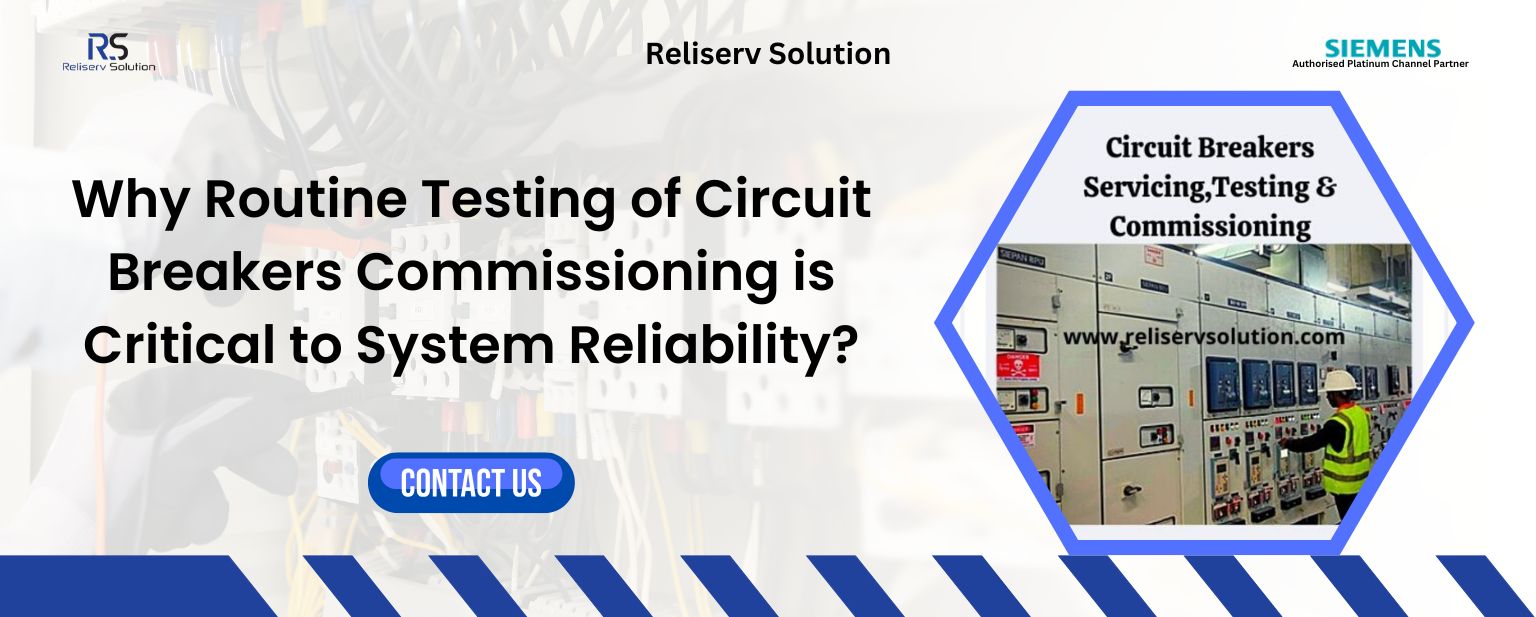
Commissioning guarantees that the equipment is ready for use. For circuit breakers, it includes testing, inspections, and performance checks.
Common tasks during Circuit Breakers Testing & Commissioning:
- Visual inspections: Look for physical damage or loose parts.
- Mechanical tests: Confirm that manual and automatic operations work.
- Insulation resistance tests: Ensure insulation is intact.
- Contact resistance measurement: Checks for wear on internal parts.
- Timing tests: Examine the breaker’s response time to malfunctions.
Each test tells something about the health of the breaker. Skipping any step can lead to unsafe conditions.
When Should Circuit Breakers Be Tested?
Circuit Breakers Testing & Commissioning should happen regularly.
Typical schedules include:
- Before first use: Always test new equipment before putting it into service.
- Annually: Most facilities do routine testing every year.
- After major faults: If a breaker has tripped during a serious fault.
- After maintenance: Always test after any repair work.
System failure risk is decreased by adhering to a schedule.
Benefits of Routine Testing
Routine Circuit Breakers Testing & Commissioning gives many benefits.
- Improved safety: Reduces fire and shock risk.
- Lower repair costs: Early detection means less damage.
- Fewer outages: Ensures a stable power supply.
- Extended lifespan: Keeps breakers in better condition longer.
- Better compliance: Helps meet safety standards.
With all these advantages, the value of testing becomes clear.
Circuit Breakers Commissioning Cost: Is It Worth It?
Some companies worry about the cost of testing and commissioning. But ignoring testing can cost much more.
Things that affect Circuit Breakers Commissioning Cost:
- Breaker size and type: Larger systems cost more to test.
- Testing frequency: More frequent testing may increase costs.
- Equipment condition: Older systems may need more work.
- Location: Remote or difficult access areas can be pricier.
Still, the cost is worth it. A single failure can lead to massive repair bills. Worse, it can stop production and cause downtime.
How to Pick a Service Provider for Circuit Breakers Commissioning
Choosing the right expert is important for safe and accurate testing.
Qualities of a Circuit Breakers Commissioning Service Provider to Consider:
- Experience: Look for teams with strong track records.
- Certifications: Ensure they meet industry testing standards.
- Testing tools: The right equipment is essential.
- Detailed reports: Ask for full documentation of all tests.
- Support services: Ongoing support is a good sign of reliability.
A good Circuit Breakers Commissioning Service Provider ensures that your system stays reliable.
Consequences of Skipping Testing
Ignoring circuit breakers, Commissioning and testing might be risky. Unexpected system problems may result from it.
Risks of avoiding routine testing:
- Unseen damage: Wear and tear go unnoticed.
- Delayed response: Breakers may not trip fast enough.
- Increased fire risk: Faults can cause arcing or fires.
- Expensive repairs: Minor problems grow into major ones.
- Lost productivity: Equipment failure leads to downtime.
Routine Testing in Real-World Settings
Many industries rely on Circuit Breakers Testing & Commissioning to protect operations.
From hospitals to factories, all require safe and reliable systems.
Examples of common industries:
- Manufacturing: Protects machines and workers.
- Data centers: Ensures continuous power.
- Oil & gas: Prevents fire and explosion risks.
- Hospitals: Keep life-saving equipment powered.
- Commercial buildings: Protects tenants and systems.
Each sector benefits from improved safety and reliability.
How Circuit breakers ensure safety in power systems.
Circuit breakers are more than just switches; they are automatic protection devices designed to detect and respond to electrical faults. The circuit breaker quickly cuts the power supply when an issue arises, like an overload or a short circuit. This fast response prevents damage to expensive electrical equipment and reduces the risk of fire or electric shock.
Here’s how circuit breakers protect systems:
- Detect Faults Instantly: They monitor current levels and react within milliseconds to irregularities.
- Interrupt the Current: Once a fault is detected, they break the circuit to stop the flow of electricity.
- Isolate the Problem: Circuit breakers ensure that only the problematic piece is disconnected, leaving the remainder of the system operational.
- Resettable Protection: After tripping, many breakers can be reset and reused, making them cost-effective.
Whether in a small building or a large industrial plant, circuit breakers are vital for keeping power systems safe and stable. Without them, electrical faults could lead to fires, widespread outages, or damage to mission-critical equipment. This is why proper Circuit Breakers Testing & Commissioning is essential, not just once, but as part of an ongoing maintenance routine.
Conclusion
Routine testing is not optional; it is critical. Circuit Breakers Commissioning ensures systems stay safe and reliable.
It helps catch problems early, reduce risk, and extend equipment life. The cost of testing is small compared to the damage caused by failures.
Choose a skilled Circuit Breakers Commissioning Service Provider to get the best results. With the right team and schedule, your system will remain secure and dependable.
Reliserv Solution, a Platinum Channel Partner of Siemens, is a trusted distributor and supplier of Siemens Numerical Relays. Headquartered in Mumbai, Maharashtra, the company provides a wide range of services and customized solutions to panel builders and various industrial sectors. If you have any questions or need assistance regarding the Circuit Breakers Commissioning, feel free to contact us at +91 7506112097 or email us at [email protected]. To explore one of our popular services, click here.