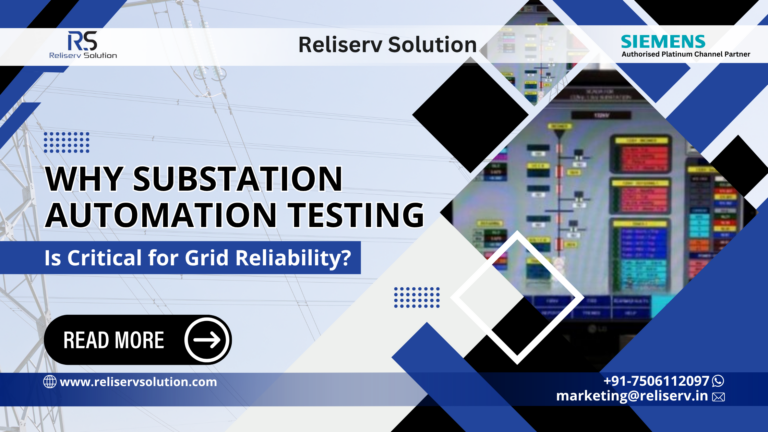
Modern power grids are becoming more complex each year. With rising demand, integration of renewable energy, and digital transformation, the reliability of grids is more important than ever. To ensure consistent performance, industries rely heavily on Substation Automation Testing and Commissioning. These processes safeguard operations, reduce downtime, and build trust in the stability of power networks.
In this blog, we will explore why Substation Automation Testing and commissioning play such a vital role in grid reliability. We will also look at their benefits, applications, costs, and the importance of working with a trusted partner.
An Introduction to the Substation Automation Testing And Commissioning
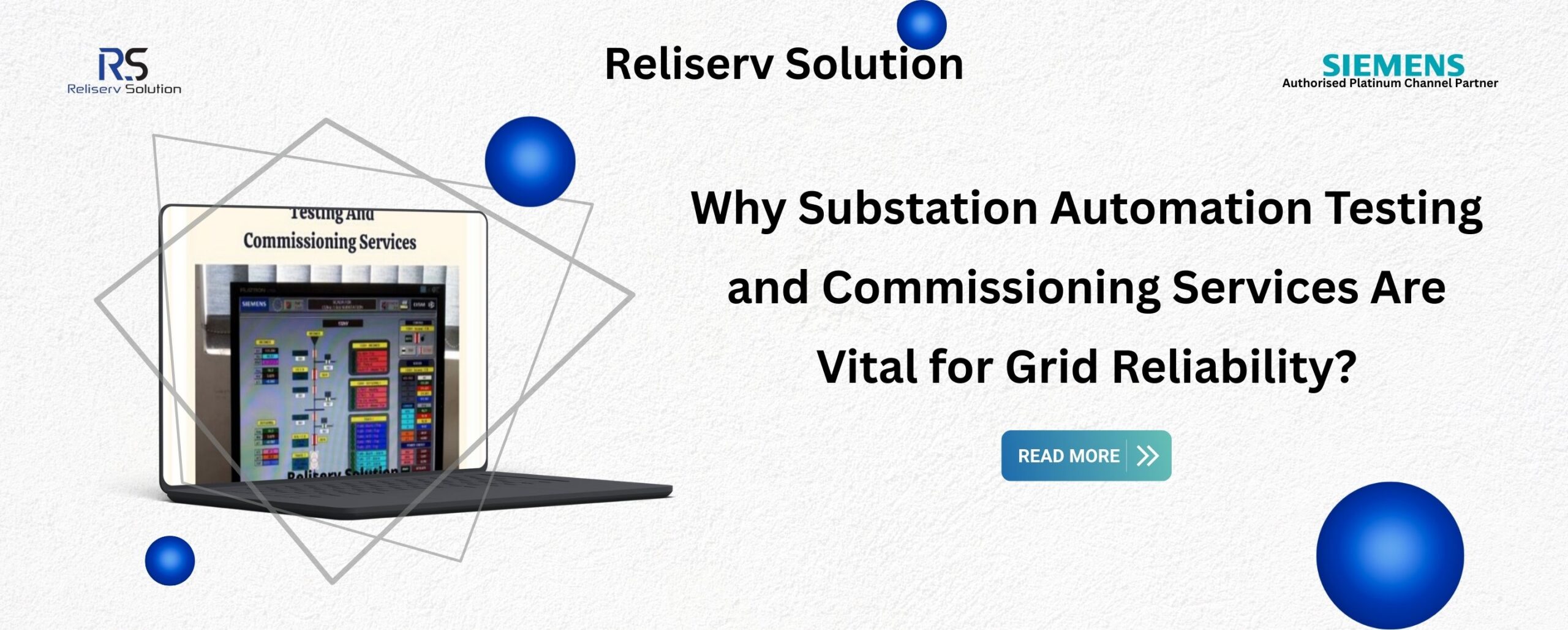
We provide comprehensive support for substation modernization through our Automation and SCADA services. Our team has successfully executed projects using advanced automation platforms from globally recognized manufacturers such as Siemens, Schneider, GE-Alstom, and ABB. We specialize in integrating IEDs from multiple vendors into a unified SCADA system by leveraging interoperability standards.
Software Expertise:
- Siemens SICAM PAS
- Siemens WinCC
- Siemens SICAM 230
- GE Alstom PaCiS
- Schneider ECO SUI
In many small and medium-scale industries, process automation is usually managed through industrial PLCs. However, critical electrical assets such as circuit breakers, relays, transformers, battery banks, and auxiliary switchgears are often left unmonitored and operate offline. As a result, valuable data remains uncollected, limiting opportunities to improve asset performance, reliability, and operational efficiency.
Substation automation integrates advanced technology into power substations for better monitoring, control, and protection. But without thorough testing and commissioning, the system cannot guarantee safe and efficient operation.
- Substation Automation Testing and Commissioning ensures every device functions as designed.
- It validates the communication between Intelligent Electronic Devices (IEDs).
- It checks system configurations to prevent misoperations.
- It ensures compliance with regulatory and safety standards.
In short, testing and commissioning confirm that everything works correctly before the system goes live.
Why Substation Automation Testing Is So Important?
Substation Automation Testing is not a one-time task. It is a continuous process that ensures grid reliability and protects investments.
Here are the main reasons why it is essential:
- Prevents faults that may cause outages.
- Ensures the safety of workers and infrastructure.
- Improves grid stability and reliability.
- Reduces downtime with faster fault detection.
- Extends the lifespan of substation equipment.
Without proper testing, even the best equipment cannot deliver expected results.
Benefits of Substation Automation Testing And Commissioning
Industries that invest in Substation Automation Testing and Commissioning see long-term benefits in reliability and cost savings.
Key benefits include:
- Reliable performance: Ensures the automation system works under all operating conditions.
- Reduced risk: Identifies potential problems before they escalate.
- Cost savings: Reduces emergency repairs and system downtime.
- Improved efficiency: Enhances the productivity of the power system.
- Future readiness: Prepares substations for renewable integration and smart grid requirements.
Human-Centered Impact
When talking about grid reliability, we must also focus on people. Reliable grids mean:
- Fewer blackouts for industries.
- Reduced safety risks for workers in substations.
- Confidence among industries that rely on uninterrupted power.
- Better support for hospitals, schools, and critical infrastructure.
The Substation Automation Testing Services Provider not only supports equipment but also secures the lives of people who depend on reliable energy.
Role of a Trusted Services Provider
Choosing the right Substation Automation Testing Services Provider is vital for success. A reliable partner brings expertise, tools, and experience to the project.
Key qualities to look for:
- Proven industry experience
- Skilled engineers and technicians
- Access to advanced testing tools
- Ability to provide customized solutions
- Strong post-commissioning support
Working with the right partner ensures smooth operations and higher system efficiency.
Cost of Substation Automation Testing
Many industries ask about the Substation Automation Testing service cost before starting a project. The cost depends on:
- Size and complexity of the substation
- Number of devices and IEDs involved
- Required testing standards and protocols
- Location and duration of the project
- Service provider’s expertise
While the upfront cost may seem significant, the long-term savings from avoided failures make it a wise investment.
Real-World Example
Imagine a chemical plant that runs 24/7. Even a few minutes of downtime can lead to losses worth millions. Without proper Substation Automation Testing and Commissioning, the plant risks sudden power failures. But with proper testing, all systems are validated, communication is seamless, and downtime is minimized. The plant can operate with confidence and stability.
Challenges in Substation Automation Testing
Like any process, Substation Automation Testing has challenges. Some of these include:
- Integration of multi-vendor equipment
- Constant updates to communication protocols
- Need for skilled manpower
- Pressure to complete within tight deadlines
A good Substation Automation Testing Services Provider knows how to handle these challenges with proven strategies.
Steps in Testing and Commissioning
The testing and commissioning process follows structured steps to ensure reliability.
- Planning: Define scope, objectives, and resources.
- Inspection: Check all devices and wiring before testing.
- Testing: Validate equipment, IED communication, and protection schemes.
- Configuration: Ensure proper settings for safe operation.
- Commissioning: Bring the system into service with final checks.
- Handover: Provide documentation and training to operators.
Each step builds confidence that the system is safe and reliable.
Future of Substation Automation
With smart grids and renewable energy integration, substations will become even more advanced. This makes Substation Automation Testing and Commissioning even more critical. Testing will evolve with:
- AI-based predictive maintenance
- Remote monitoring tools
- Cloud-based testing solutions
- Improved cybersecurity checks
These advancements will help grids remain stable while adapting to new challenges.
Conclusion
Reliable power is the foundation of every modern economy. Without proper Substation Automation Testing and Commissioning, this reliability cannot be achieved. From ensuring safety to improving efficiency, the process benefits both industries and communities.
Yes, the Substation Automation Testing service cost may vary, but the long-term value it delivers is unmatched. Partnering with a skilled Substation Automation Testing Services Provider ensures peace of mind and strong grid reliability.
In the end, Substation Automation Testing is not just a technical process—it is a commitment to safety, stability, and progress. By embracing it, industries ensure that their operations remain uninterrupted, efficient, and future-ready.
Over the years, we have offered a variety of services, including our well-known Substation Automation Testing and Commissioning Services. The main office of Reliserv Solution is located in Mumbai, Maharashtra. Particularly in the panel-building industries, our customized services and solutions could be advantageous to many industries. If you need help or would like to know the current price, please call +917506112097 or send an email to [email protected]. Our complete list of Field Services can be found by clicking here.