Did you know that undetected short circuits in power distribution networks cause millions in equipment damage every year? Faster fault detection directly reduces outage time; it also protects infrastructure from irreversible damage. That is exactly why modern utilities and industries are upgrading their systems with smarter communication gateways.
The Siemens SICAM FCG Gateway is one such solution changing how short circuit indicators work in the field. It acts as a bridge between field devices and control centres; it collects, processes, and transmits fault data reliably. Understanding what this device does helps procurement managers, engineers, and plant operators make better purchasing decisions.
What Is the Siemens SICAM FCG Gateway and Why Does It Matter?
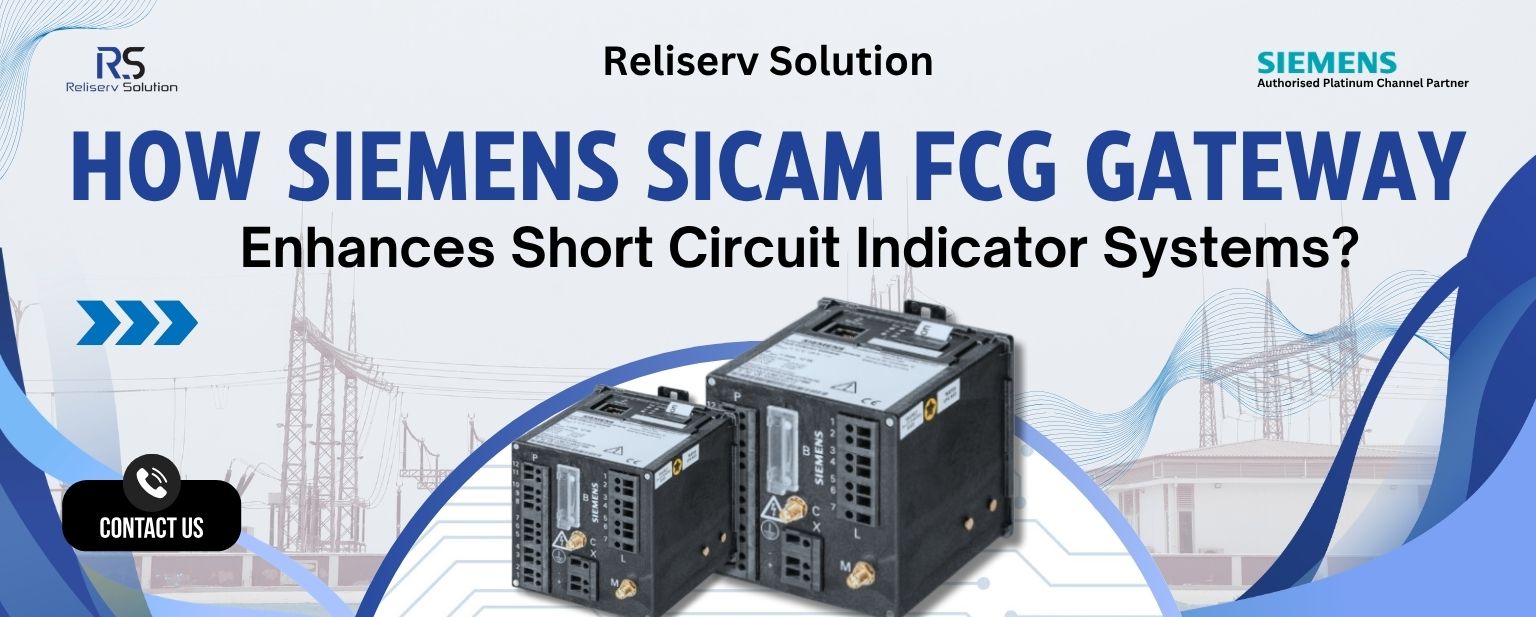
The Siemens SICAM FCG Gateway is a field communication gateway designed for medium-voltage distribution networks. It connects short circuit indicators (SCIs) to SCADA systems and control centres. As a result, utilities gain real-time visibility into fault conditions across their entire network.
Short circuit indicators detect fault currents on overhead lines and underground cables. However, without a gateway, this data stays local and inaccessible remotely. The Siemens SICAM FCG solves this by aggregating indicator signals and forwarding them through standard communication protocols.
Key reasons this device matters:
- It eliminates manual patrols to locate faults; field crews receive precise fault location data remotely
- It supports multiple communication standards; including IEC 61850, DNP3, and IEC 60870-5-101/104
- It reduces fault location time from hours to minutes, directly improving restoration speed
- It integrates seamlessly with existing SCADA infrastructure, without costly system overhauls
How the Gateway Communicates with Short Circuit Indicators
The Siemens SICAM FCG Gateway collects data from multiple short circuit indicators installed along distribution feeders. It processes the incoming signals; then it transmits structured fault data upstream to control centres. This two-way communication flow is what makes the system truly intelligent.
The gateway supports both wired and wireless communication paths. Furthermore, it uses cellular, radio, or fibre connections depending on site conditions. This flexibility makes it suitable for urban substations, as well as remote rural line sections.
Communication Protocols Supported
- IEC 61850 standard for substation automation; ensures interoperability across vendors
- DNP3 is widely used in North American utilities; it supports legacy SCADA systems
- IEC 60870-5-101/104 is common in European distribution networks; it enables serial and TCP/IP communication
- MQTT lightweight protocol; suitable for IoT-based monitoring platforms
Key Features That Improve Fault Detection Performance
The Siemens SICAM FCG Gateway delivers several hardware and software features that directly strengthen short circuit indicator systems. These features work together; they reduce the response times and increase the accuracy of the diagnosis.
- Real-Time Fault Localisation: The gateway timestamps every fault event it receives. Therefore, control room operators know the exact sequence of events during a fault. This timestamp accuracy narrows the fault search zone significantly.
- Remote Configuration and Diagnostics: Engineers can configure connected SCIs remotely through the gateway interface. Consequently, there is no need to send technicians to the field for routine parameter changes. This saves time; it also reduces operational costs.
Data Logging and Event Storage
- The gateway stores event logs locally; useful during communication outages
- Historical data helps engineers identify recurring fault patterns on specific feeders
- Logged data supports post-fault analysis, improving long-term network planning
- Storage capacity handles thousands of events, ensuring no data loss during high-activity periods
Benefits for Distribution Network Operators
Distribution network operators gain measurable advantages by deploying the Siemens SICAM FCG Gateway. The device directly impacts reliability indices like SAIDI and SAIFI; these are key performance metrics for utilities worldwide.
Faster fault location means repair crews arrive at the right spot sooner. In addition, fewer unnecessary patrols reduce vehicle costs and crew fatigue. Overall, the entire fault management process becomes leaner and more data-driven.
Operational Benefits at a Glance
- Reduced outage duration; customers experience shorter interruptions
- Improved asset utilisation; field teams focus on confirmed faults rather than searches
- Better regulatory compliance; utilities meet government-mandated reliability standards
- Enhanced customer satisfaction; faster restorations build public trust in the utility
Financial Benefits
- Lower operational expenditure on patrol and inspection activities
- Reduced penalties for exceeding permitted outage durations
- Extended equipment lifespan through proactive fault monitoring, avoiding secondary damage
Siemens SICAM FCG Gateway Price and Procurement Considerations
Understanding the Siemens SICAM FCG Gateway Price is essential before planning a deployment. The pricing varies based on communication options, number of SCI connections, and software licensing requirements. The total cost of ownership, not just the unit price, should be considered by buyers.
Working with certified Siemens SICAM FCG Gateway Suppliers ensures you receive genuine products with full manufacturer support. Authorised suppliers provide technical consultation; they also assist with installation and commissioning. Choosing the right supplier reduces project risk considerably.
What to Ask Your Supplier
- Does the gateway support the communication protocol used in your existing SCADA system?
- What is the warranty period, and what does it cover?
- Are firmware updates included in the purchase price?
- Does the Siemens SICAM FCG Gateway Price include configuration software, or is it licensed separately?
Reputable Siemens SICAM FCG Gateway Suppliers will answer all these questions clearly. Furthermore, they will provide reference installations from similar utility environments.
Installation and Integration Best Practices
Installing the Siemens SICAM FCG Gateway requires careful planning at both the communication and physical levels. The gateway must be mounted in a weatherproof enclosure when deployed outdoors; it needs stable power and a reliable communication link.
Integration with SCADA typically involves protocol mapping and point configuration. Therefore, experienced system integrators familiar with Siemens products add significant value here. They reduce commissioning time; they also minimise configuration errors that could delay project handover.
Steps for a Successful Deployment
- Conduct a site survey; assess communication coverage and mounting locations.
- Define data points; list all SCI signals to be transmitted to the control centre.
- Configure communication parameters; match protocol settings with SCADA requirements
- Test end-to-end communication; verify fault signals reach the control room correctly
- Document the configuration; keep records for future maintenance and troubleshooting.
Real-World Applications Across Industries
The Siemens FCG Gateway finds application across multiple sectors beyond traditional utilities. Industrial plants, railway networks, and renewable energy installations all benefit from its fault detection capabilities. Each sector has unique requirements; however, the gateway adapts through its flexible configuration options.
In renewable energy parks, for example, quick fault location protects expensive generation equipment. Meanwhile, in railway traction networks, rapid fault clearance maintains service punctuality. Industrial plants benefit from reduced production downtime when faults are located and cleared faster.
Sector-Specific Use Cases
- Municipal utilities: Monitoring urban medium-voltage cable networks; reducing outage impact on dense populations
- Industrial campuses: Protecting internal distribution feeders; minimising production line interruptions
- Renewable energy: Supervising collection feeders in wind and solar farms; protecting inverters and transformers
- Railway infrastructure: Monitoring traction power feeders; ensuring train service continuity
Conclusion
The Siemens SICAM FCG Gateway transforms short-circuit indicator systems from passive field devices into active components of an intelligent distribution network. It bridges the gap between physical fault detection and digital control, enabling faster decisions and faster restorations. Consequently, utilities and industries that deploy this gateway see measurable improvements in reliability and operational efficiency.
Whether you are evaluating Siemens SICAM FCG Gateway Price options or comparing Siemens SICAM FCG Gateway Suppliers, the key is to align the product capabilities with your specific network requirements. Partner with an authorised supplier; ask the right technical questions; and plan your integration carefully. Investing in the right gateway today builds a more resilient and responsive power distribution network for the future.
Improve the speed and accuracy of fault detection with the Siemens SICAM FCG Gateway.
Designed to enhance short circuit indicator systems, it enables reliable data communication, faster fault localization, and improved network visibility for efficient power distribution management. At Reliserv Solution, a Platinum Channel Partner of Siemens, we provide advanced automation and communication solutions tailored to modern power systems. Call us at +917506112097 or email [email protected] for expert guidance and support. Click here to explore the Siemens SICAM FCG Gateway and discover how it enhances the performance of short circuit indicator systems.