A single wrong winding ratio can damage an entire substation. That is why engineers never skip the ratio test before energizing a transformer.
Power Transformer Testing confirms a unit is safe, accurate, and ready for service. During Power Transformer Commissioning, the transformer ratio test checks whether the primary and secondary windings match the design ratio. Skipping this step risks costly failures later. This guide explains why the test matters and how engineers carry it out on site.
Substations across India rely on this simple check every single day. Yet many teams still underestimate how much it protects long-term equipment reliability and overall grid stability.
What Is the Transformer Ratio Test?
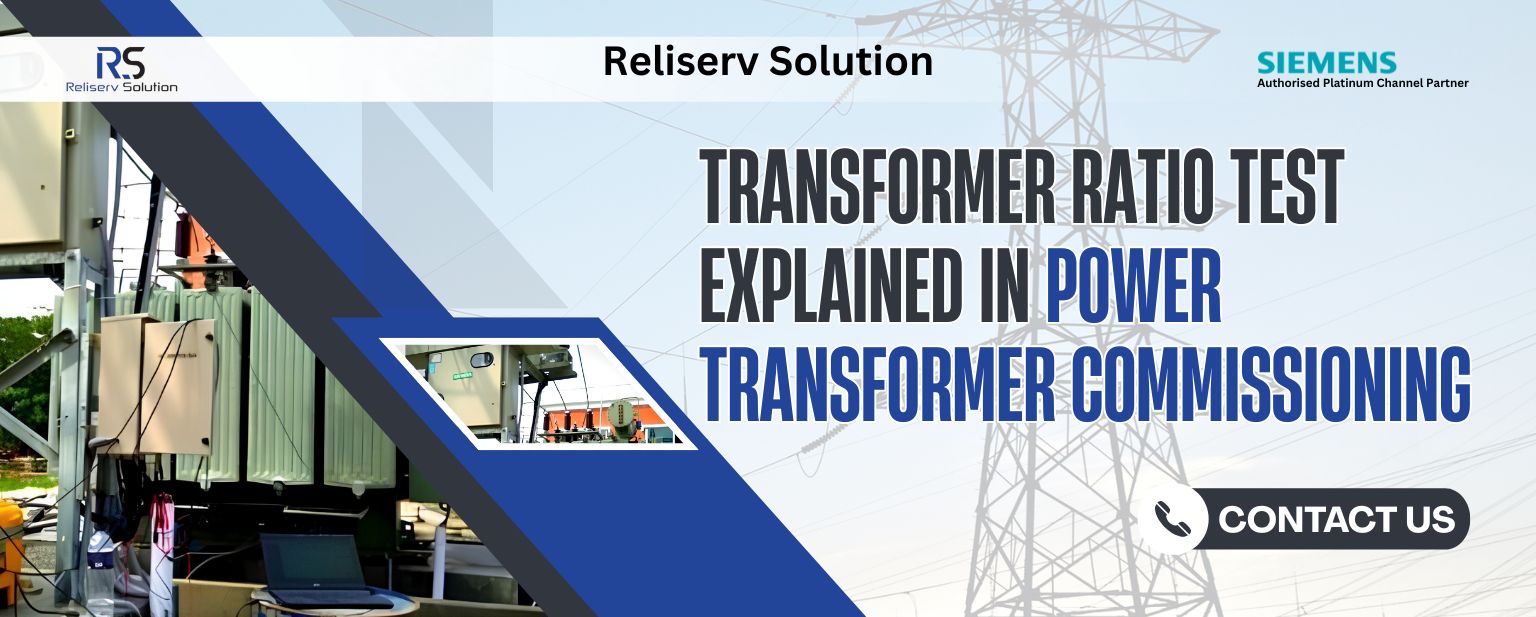
The transformer ratio test is also called the Transformer Turns Ratio, or TTR, test. It measures the voltage ratio between the primary winding and the secondary winding. Engineers then compare this measured ratio against the nameplate value. A close match confirms healthy windings. It also confirms correct tap settings across every position.
A turns ratio is the number of primary winding turns divided by the number of secondary winding turns. This ratio is essential because it determines how a transformer steps voltage up or down. If the measured ratio drifts too far from the design value, something inside the winding has likely gone wrong.
Technicians typically accept a deviation of 0.5% or less from the nameplate ratio. Anything beyond that range signals a possible problem. Shorted turns or loose connections often cause such deviations. Ambient temperature and test voltage stability can also influence the reading, so engineers control these variables carefully.
This test forms one of the core checks in every Power Transformer Testing & Commissioning Services package. It sits alongside insulation resistance, winding resistance, and magnetic balance tests. Together, these tests build a complete health picture before the unit goes live.
Why the Ratio Test Matters in Power Transformer Testing
Power transformers are expensive assets, and utilities cannot afford unplanned outages. Consequently, the ratio test plays a central role in every commissioning checklist across India.
During transport and installation, transformers face vibration, humidity, and rough handling. As a result, winding turns can shift, or insulation can weaken over time. The ratio test catches these issues before the transformer ever touches the grid. Even a well-manufactured unit can develop a fault during a long road journey to the site.
Furthermore, tap changers rely on accurate ratio readings at every position. If a tap changer contact is worn or misaligned, the ratio test will reveal it fast. This helps technicians fix problems before commissioning proceeds further.
Here is why the ratio test remains non-negotiable:
- It confirms correct winding connections after manufacturing or repair;
- It verifies tap changer accuracy across all positions;
- It detects shorted turns that other tests might miss;
- It protects downstream equipment from voltage mismatches;
- It supports compliance with recognized international testing standards.
Therefore, no commissioning engineer should treat this test as optional. It remains one of the fastest ways to confirm transformer health before energization. It also gives asset owners documented proof that the unit meets design specifications. This proof supports warranty claims and long-term maintenance planning for the years ahead.
How Engineers Perform the Turns Ratio Test
Field engineers use a dedicated TTR test set to run this check. The process is straightforward, yet it demands precision at every single step.
First, technicians de-energize the transformer and isolate it from the grid. Next, they connect the TTR test set leads to the primary and secondary bushings. Then, they apply a low test voltage and record the resulting ratio carefully.
The typical procedure follows these steps:
- Isolate and ground the transformer safely;
- Connect test leads to the correct winding terminals;
- Select the tap position for testing;
- Apply test voltage and record the measured ratio;
- Repeat the process for every tap position and phase;
- Compare results against nameplate ratios and standard tolerances.
Engineers repeat this sequence for every phase and every tap position. This thoroughness ensures no hidden fault escapes detection during Power Transformer Commissioning. Skipping even one tap position can leave a fault undetected.
Modern TTR test sets calculate deviation automatically, which speeds up reporting. However, experienced engineers still review raw data manually before signing off on results. Weather conditions near the test site can also affect readings. Vibration matters too, so engineers try to test in stable conditions.
Common Ratio Test Deviations and What They Mean
Not every deviation points to a serious fault. Still, engineers must interpret each result with care. Understanding the pattern behind a deviation saves time. It also prevents unnecessary transformer downtime.
A small, consistent deviation across all phases often signals a measurement or connection error. On the other hand, a deviation isolated to one phase usually points to a genuine winding problem. Comparing results across all three phases, therefore, helps engineers narrow down the true cause quickly.
Common causes of ratio test failures include:
- Shortened or open winding turns;
- Poor tap changer contact;
- Incorrect nameplate data or wiring diagrams;
- Loose or corroded bushing connections;
- Core magnetization effects during the test itself.
When results fall outside tolerance, engineers should not condemn the transformer right away. Instead, they should repeat the test and check every connection. They should also cross-reference results with winding resistance data. This careful approach prevents false rejections. It also avoids unnecessary repair costs for the owner. A second, independent reading often clears up any doubt about the first result.
Understanding Power Transformer Testing & Commissioning Cost
Budgeting for commissioning work matters as much as the testing itself. Many procurement teams ask about Power Transformer Testing & Commissioning Cost before finalizing a project timeline.
Several factors influence the final price. Transformer size and voltage class drive most of the cost. Larger units need heavier test equipment and more labor hours. Site location also matters; remote substations add travel and logistics expenses. Older transformers may also need extra diagnostic tests, which can raise the overall cost slightly.
Additional cost drivers include:
- Number of transformers tested during a single visit;
- Scope of testing, such as online versus offline checks;
- Urgency of the project timeline;
- Availability of skilled testing personnel;
- Equipment calibration and certification requirements.
As a supplier of protection relays and transformer testing services in India, we often see one pattern. Bundling multiple tests during one site visit reduces overall spend. Planning, therefore, keeps commissioning budgets predictable. It also helps procurement teams avoid last-minute cost surprises. Requesting a detailed quote early in the project helps teams compare suppliers fairly.
Choosing the Right Power Transformer Testing & Commissioning Supplier
Selecting a dependable Power Transformer Testing & Commissioning Supplier shapes how smoothly a project runs. Not every provider carries the same equipment, experience, or safety record.
A qualified supplier should offer full offline and online testing capability. This includes turns ratio, tan delta, insulation resistance, and partial discharge measurement. Reliserv Solution, based in Navi Mumbai, delivers this complete service. The team works across LV, MV, HV, and EHV voltage levels. It also handles both AIS and GIS substations with equal confidence. Owning in-house test equipment lets the team schedule jobs faster and avoid third-party delays.
When evaluating a supplier, buyers should look for:
- Proven experience across multiple voltage classes;
- Ownership of calibrated, in-house testing equipment;
- A strong track record with EPC contractors and utilities;
- Fast turnaround without compromising accuracy;
- Clear, well-documented test reports for every job.
Choosing wisely at this stage prevents delays. It also reduces the risk of rework later in the project. A supplier who understands local grid conditions adds even more value to the job.
Conclusion
The transformer ratio test remains one of the most reliable checks within Power Transformer Testing. It confirms winding integrity and validates tap changer accuracy. It also protects against costly failures after energization. Skilled testing teams combine this test with insulation, resistance, and oil analysis. Together, these checks build a complete health picture of every transformer.
Working with an experienced Power Transformer Commissioning partner makes the entire process faster and safer. Consistent, well-documented testing also builds long-term trust between utilities and their contractors. If your team is planning an upcoming substation project, reach out to a trusted testing partner early. Build ratio testing into every commissioning schedule from day one, and protect your investment for years to come.
Ensure the reliability and accuracy of your power transformer with professional Transformer Ratio Testing during commissioning. This critical test verifies winding ratios, detects manufacturing or installation issues, and helps ensure optimal transformer performance before energization and operation. At Reliserv Solution, we provide comprehensive Power Transformer Testing and Commissioning services tailored to utility and industrial applications. Call us at +917506112097 or email [email protected] for expert support and technical assistance. Click here to learn how Power Transformer Testing helps improve transformer reliability, prevent failures, and ensure successful power transformer commissioning.